
Spirulina flakes for granola and muesli manufacturers are a visible inclusion, so their value depends on what survives blending, transfer, filling and the consumer’s bowl. A fine green powder might color the entire mix; a flake can create distinct pieces, but it can also crumble into dust or segregate in the bag. The purchase decision is therefore a physical and sensory acceptance test for a named flake lot, not a general claim that flakes are nutritionally superior.
The supplier’s spirulina category page describes whole green biomass. Request confirmation of an actual flake SKU and its technical sheet before designing a trial; a powder listing does not establish flake availability.
Contents
- What job must the flakes perform in the finished cereal?
- Which flake specifications belong in the sample brief?
- Where should flakes enter a toasted granola process?
- How do you measure breakage through the line?
- Will the serving contain a consistent number of flakes?
- How should flavor and appearance be judged?
- What moisture and packaging trials are needed?
- Which safety and labeling documents should be reviewed?
- How do quotes compare after usable yield?
- What release rule makes a scale order defensible?
1. What job must the flakes perform in the finished cereal?
Define whether the flakes are meant to be a clearly visible green inclusion, a measured dose of whole biomass, or simply an ingredient named on the panel. These are different briefs. A small amount can be visually prominent without contributing much nutrition per serving; calculate any proposed nutrient statement from the whole finished recipe and validated analyses. In a loose muesli, color and piece integrity may matter most. In clustered granola, adhesion and abrasion against hard toasted pieces may dominate.
Establish a control cereal without spirulina and a powder comparator only if the brand is genuinely considering both formats. Score appearance in the dry pack and after milk or yogurt is added. The published distinction between whole biomass and blue extract matters here: neither a blue pigment nor a fine powder should silently substitute for an approved flake.
| Product objective | Measure on finished cereal | Reject signal |
|---|---|---|
| Visible pieces | Count intact green pieces per serving | Mostly dust or hidden fragments |
| Declared quantity | Assayed or controlled addition per batch | Addition varies by fill position |
| Sensory fit | Blind bowl test in intended serving base | Persistent algal aftertaste |
2. Which flake specifications belong in the sample brief?
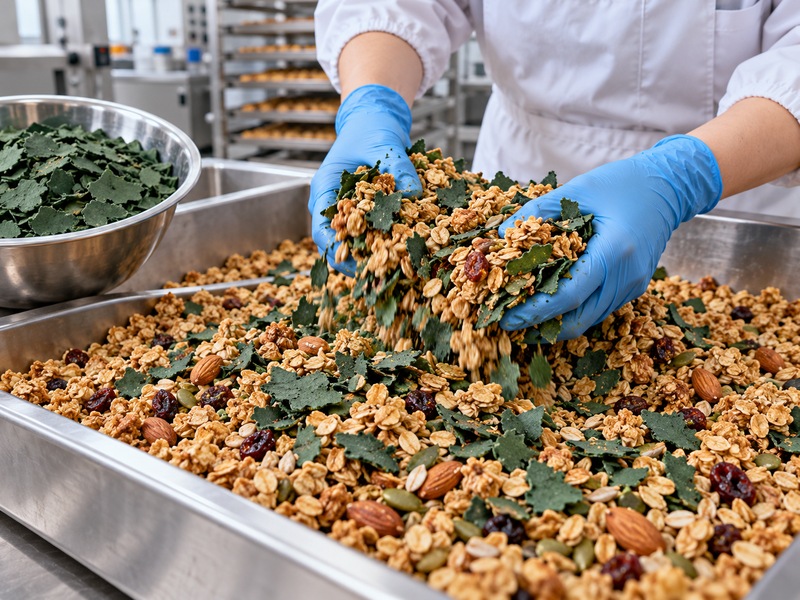
Ask for a photographed size distribution, sieve method, thickness, bulk density, moisture, color reference, ingredient declaration and shelf-life/storage guidance for the offered SKU. The label “flake” covers many shapes. A nominal mean size can conceal a large fine fraction that behaves like powder, so request the percentages retained in the sieve bands that matter to your recipe. Specify both the sample lot and the proposed commercial grade, then keep a retain sample.
Do not assume that a granule described as a flake will have the visual size or breakage behavior required by the cereal brief. Have the supplier identify whether its candidate is an intact dried piece, a granule or an agglomerate, and obtain the processing declaration needed for your ingredient policy.
| Attribute | Request from supplier | Confirm in plant |
|---|---|---|
| Size bands | Sieve distribution and permitted fines | Incoming-sample sieve result |
| Piece strength | Test method or handling advice | Surviving pieces after filling |
| Composition | TDS and actual-lot COA | Ingredient identity and acceptance |
| Pack | Inner liner and shipping unit | Fit with storage and dispensing |
3. Where should flakes enter a toasted granola process?
Map the actual process before asking for a recommended addition point. If oats, syrup and nuts are baked or toasted, a post-heat inclusion may protect the intended appearance and avoid unnecessary thermal exposure. That is a trial hypothesis, not a universal rule: a line may require a later coating, cooling or mixing step whose mechanical force breaks flakes. Record product temperature, residence time and water addition at each possible point. For muesli without a heat step, compare early and late dry blending instead.
Run a small, controlled ladder with the same flake lot and dose, changing only addition point. Check food-safety implications of adding an ingredient after any kill step with the facility’s hazard plan. A post-heat addition has to meet the finished product’s microbiological criteria; do not assume an ingredient is safe merely because it was dried.
| Addition point | Potential advantage | Required check |
|---|---|---|
| Before toast | Simple current process | Color, flavor and piece survival |
| After cooling | Less heat exposure | Hygiene and blend uniformity |
| Immediately before fill | Minimal handling | Segregation in hopper and packs |
4. How do you measure breakage through the line?
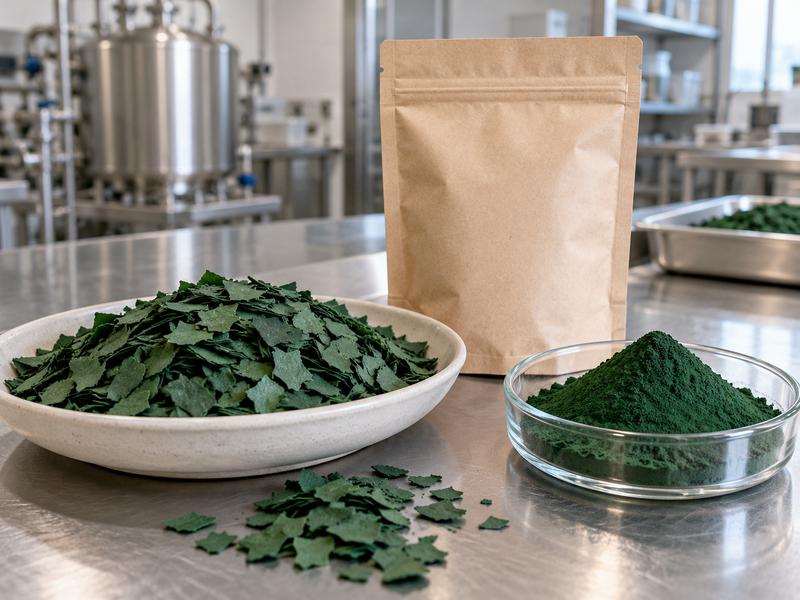
Collect matched samples at the ingredient drum, after the mixer, after every transfer and from finished packs. Use a documented sieve stack and weigh the fine fraction at each point; pair it with a count of visibly intact pieces in a standard mass. The resulting loss is more useful than a supplier photograph. Run the line at its normal fill rate and pack size, since a gentle bench spatula will not reproduce augers, drop heights or vibratory feeders.
Photograph samples with a scale marker under fixed lighting. Compare the finished pack immediately and after a distribution simulation agreed with your packaging team. If fines rise sharply at one transfer, change that transfer or addition order before rejecting the ingredient. Define the maximum acceptable fines percentage in advance; otherwise the team may approve a attractive pilot photograph while overlooking the dust that appears in commercial packs.
5. Will the serving contain a consistent number of flakes?
Bulk density and piece size can cause segregation during storage, transport and filling. Sample the top, middle and bottom of the blend hopper, then early, middle and late retail packs. Divide a pack into the intended serving size and count flakes, or use a validated image-analysis method if color permits. Compare both average and spread. A consistent batch-average addition does not prove that a consumer’s bowl receives a comparable portion.
If the inclusion is part of a quantified label or marketing statement, define an analytical or weight-based control rather than relying on visual counts alone. For a mixed-grain product, repeat with the real inclusion load, not just oats; raisins, nuts and seeds change flow. If variation is high, consider premixing with a compatible dry fraction or moving the addition point closer to filling, then recheck breakage.
| Sampling level | Number to record | Practical decision |
|---|---|---|
| Hopper positions | Flakes per fixed sample mass | Check segregation |
| Fill sequence | Early, middle and late packs | Check dosing drift |
| Consumer servings | Range and outliers | Judge bowl experience |
6. How should flavor and appearance be judged?
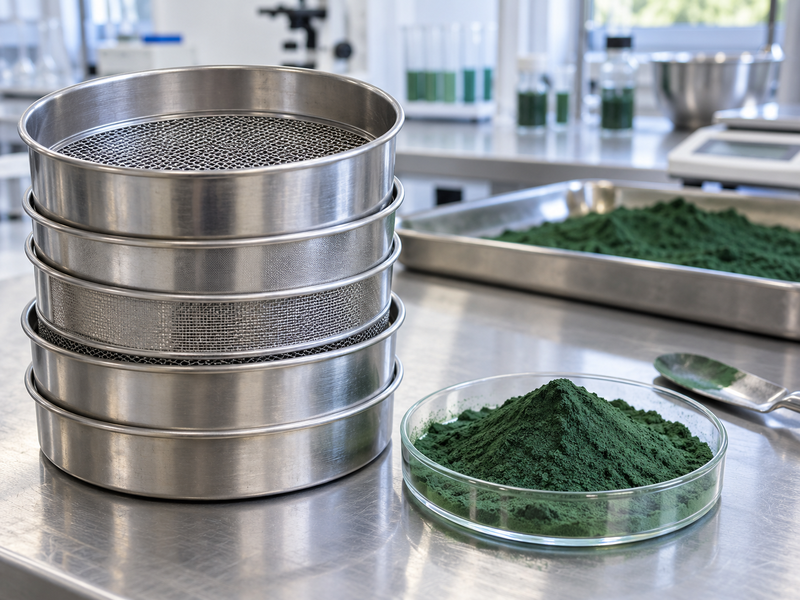
Use a blind panel with the same base cereal, sweetener, nuts and fruit. Serve dry and in the intended milk or yogurt at realistic standing times. Score green-piece visibility, odor on opening, first bite, aftertaste and whether fragments make the base look dusty. Compare a control and at least two flake additions within the brand’s candidate range; those are experimental levels, not supplier-recommended doses.
Ask panelists what they would infer from the product’s appearance, because a vividly green flake may communicate a stronger flavor than it delivers. Check color under store lighting and in a clear bowl. If a claim about protein or micronutrients motivates the addition, calculate the actual contribution from the proposed grams per serving and lot data before choosing a level. A visually pleasing flake amount is not automatically a meaningful nutrient amount.
7. What moisture and packaging trials are needed?
The question is whether pieces remain distinct during the declared shelf life. Measure incoming moisture and the finished cereal’s water activity using validated methods. Compare flake hardness, clumping, discoloration, odor and fine fraction after storage in the proposed pack. Include the highest expected humidity and temperature that the product’s distribution claim permits. Dried fruit can create local moisture gradients even when the composite water activity looks acceptable, so inspect contact points as well as a homogenized sample.
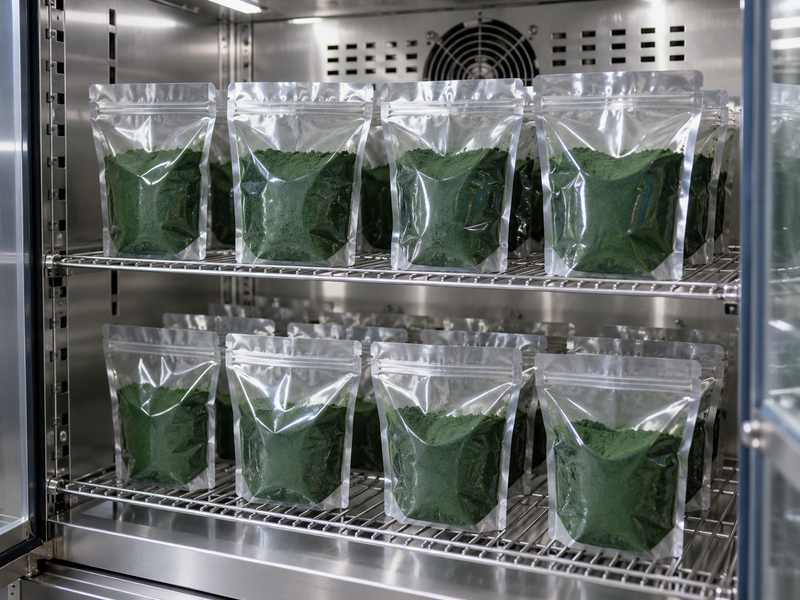
Use the intended inner liner and closure; a jar on a laboratory bench may misrepresent a pouch on a pallet. Ask the supplier for storage instructions and package format, then verify them against your line. Set a hold-time limit for opened ingredient containers if moisture pickup appears during production.
| Hold point | Observation | Acceptance evidence |
|---|---|---|
| Open ingredient | Moisture uptake and clumping | Shift-length handling trial |
| Packed cereal | Piece integrity and odor | Real-time or justified accelerated hold |
| After transport | Fines and segregation | Distribution simulation |
8. Which safety and labeling documents should be reviewed?
Obtain a current TDS, ingredient and processing declarations, lot-linked COA, microbiology and contaminants relevant to your market, plus allergen and organic evidence if those claims matter. A certificate for a company is not a release result for the exact lot. Check whether an ingredient added after a heat step meets the cereal’s post-process control plan. Confirm identity as whole spirulina biomass and the wording permitted for the destination market.
If the cereal is promoted for protein, verify the finished product rather than treating a high-protein ingredient as proof of a finished-food claim. Review claims with regulatory counsel for each country of sale. Where the supplier proposes another form after a flake trial, require a fresh process evaluation: powder and granules can change both hygiene handling and label distribution.
9. How do quotes compare after usable yield?
Request a quote on the same delivery term, currency, pack and volume basis for every candidate. Then calculate cost per accepted kilogram of visible pieces after line losses, not only price per kilogram received. Include fines diverted or rejected, cleaning time, additional mixing, stock loss from damaged bags and the number of servings that pass the appearance standard. Do not assume fines are automatically waste; they may be usable in another validated product, but only if the food-safety and traceability system supports that route.
Forecast call-offs from realistic monthly production, not annual volume alone. Ask for a matched sample from the commercial process and confirmation that future lots will meet agreed size and fine-fraction limits. A cheap flake with high breakage can cost more per acceptable cereal pack than a stronger, higher-priced candidate.
| Quote component | Comparable basis | Why it changes the decision |
|---|---|---|
| Ingredient | Delivered cost per kg | Starts the calculation |
| Accepted yield | Intact pieces after pack | Captures damage |
| Operations | Cleaning and rework minutes | Captures line cost |
| Repeat supply | Lot variability and call-offs | Protects approval |

10. What release rule makes a scale order defensible?
Write a one-page acceptance rule before issuing a production purchase order. Name the SKU, lot traceability, target size bands, maximum fines at receipt and after filling, approved addition point, sensory threshold, moisture or water-activity criteria, and the test method for each. Attach representative finished-pack photographs. Decide which deviations require rework, a supplier investigation or rejection. Run a second lot if the application depends on tight color or size consistency.
Procurement should approve a supplier’s commercial pack only after R&D and quality have signed the same trial record. A request for a sample, COA or breakage data remains a request until the supplier supplies and the buyer checks it. This rule makes a future order repeatable without pretending that every spirulina flake in the market behaves alike.
Before the first full order, assign ownership of every gate. Receiving quality checks the unopened ingredient and its lot documents; operations measures fines and distribution after filling; R&D judges the bowl test; procurement confirms that the quoted pack and call-off schedule match the tested grade. Save a reference bag from the approved run. When the next lot arrives, compare it with that bag using the same sieve, serving count and sensory method.
If the supplier changes flake-making or packaging, repeat the line step most exposed to that change. This is cheaper than discovering after launch that a nominally identical ingredient produces a visibly different cereal.
FAQ
Q1. Are flakes always better than powder in granola? No. Flakes are useful when visible pieces are the design objective. Powder can be appropriate when uniform green color matters more; compare finished packs.
Q2. Should flakes be added after toasting? Test that option when the process allows it, then check microbiological controls and breakage in the late mixer.
Q3. Can a flake COA prove bowl-to-bowl consistency? No. The COA describes a lot; serving distribution needs line and pack sampling.
Q4. What should a buyer specify first? The intended cereal, target visible size, acceptable fines and planned addition point.
Q5. Does a green appearance justify a nutrition claim? No. Calculate and verify the contribution in the finished serving under the destination’s rules.
Next step: For a granola or muesli trial, contact SpirulinaCN with the cereal blend, toast and packing sequence, target flake size, anticipated annual quantity, pack format and destination. Ask whether a matching flake SKU is available, then request its sample, TDS, lot COA and a quote that supports a measured breakage trial.