
Spirulina extract ingredient label declaration can trip up a U.S. brand that buys “blue spirulina” and then copies that trade name onto a finished-food label. The solution is to establish the regulated material, its color function, and every component in the supplied mixture before selecting wording. FDA’s current spirulina extract rule identifies a specific color additive; FDA’s label policy explains how certification-exempt colors can be declared.
This is a workflow for label review, not a universal phrase that fits every formula.
Contents
- What ingredient does the rule name?
- Why is “blue spirulina” a risky shortcut?
- How does FDA treat exempt color declarations?
- When should the color function be clear?
- How are carriers and subingredients reviewed?
- Does a front label claim replace the ingredient list?
- What if a food has a standard of identity?
- How does the delayed 2026 order matter?
- What should label counsel receive?
- What is a defensible approval workflow?
1. What ingredient does the rule name?
Match the commercial SKU to 21 CFR 73.530
The U.S. regulation names “spirulina extract,” defined as the filtered aqueous extract of dried Arthrospira platensis biomass whose principal coloring components are phycocyanins. It is not the same as whole green spirulina powder. The rule also sets specifications and describes which diluents may appear in color-additive mixtures for food use. Before a label writer picks wording, quality and regulatory teams need to know whether the purchased blue powder meets that identity. Ask for a manufacturing description, complete composition, and lot documentation.
Name the material precisely: a supplier’s category page may show several color strengths, carriers, and formats. One product’s label decision should not be copied automatically to another. The blue spirulina range can start a sourcing conversation, but the actual order specification must settle what is in the bag. A descriptive name on a quotation cannot establish compliance or dictate the finished-food ingredient declaration. Review the material’s function in the final recipe as well as its regulatory identity.

2. Why is “blue spirulina” a risky shortcut?
Trade language can blur material and function
“Blue spirulina” is widely used in commerce, but it may describe a phycocyanin-rich extract, a formulated color blend, or simply a marketing impression. U.S. color regulation uses the name spirulina extract for a defined material. Copying the trade term into an ingredient statement without checking its relationship to the regulated name can conceal whether a color additive was added. It can also obscure carriers that contribute meaningful weight to the purchased ingredient.
A label review should start with the legal identity and full composition, then test any consumer-friendly wording against applicable rules.
Read beyond the front panel: a product called “natural blue” is still an added color in the finished food. FDA’s color-additive nomenclature and labeling rules do not turn on whether the source sounds familiar. A flavoring, nutrient, and color can each require different presentation even if all come from plants or algae. The whole spirulina ingredient page illustrates why whole biomass and isolated blue pigment should not share one generic label line. Keep the SKU distinction in the master formula.
| Commercial wording | What it may mean | Reviewer check |
|---|---|---|
| Blue spirulina | Broad trade name | Exact regulated material |
| Spirulina extract | Defined color additive | Identity and use conditions |
| Whole spirulina | Biomass ingredient | Different composition |
| Blue color blend | Extract plus carriers | Full subingredient list |
3. How does FDA treat exempt color declarations?
Read the policy and the governing rules together
FDA’s Compliance Policy Guide 587.100 addresses how added certification-exempt colors may be described on food labels. It discusses statements such as “color added” and examples that identify a color by its specific common or usual name and function. It also cautions against using “natural color” as an ingredient declaration because that can misleadingly suggest the color occurs naturally in the food.
The guide is a policy document, so the final label still needs review under applicable statutes and regulations.
Avoid a canned answer: acceptable presentation can depend on the ingredient, product type, and full formula. A specific form such as “spirulina extract (color)” may be a review candidate, not a phrase this article approves for every product. Label counsel should check the entire ingredient statement, any applicable special rules, and whether the color mixture’s carriers require their own declaration. Confirm the latest FDA guidance before artwork approval; an archived policy slide can miss later developments.

4. When should the color function be clear?
Tell readers why the added material is present
If spirulina extract colors the food, the declaration should accurately convey that added color role under the applicable U.S. requirements. FDA’s policy describes specific-name-plus-function wording as one way to make an exempt color clear. An ingredient list that presents “spirulina” as if it were only a whole-food nutritional component may mislead when the purchased material is concentrated extract used for a blue hue.
The distinction also matters to claims elsewhere on the package: “contains spirulina” might suggest a nutritional amount of whole biomass the formula does not provide.
Check the formula purpose: product development may use extract for color, while marketing may want to discuss its source. Those statements should be consistent. The required ingredient declaration and voluntary front-of-pack language serve different jobs. An ingredient statement cannot be replaced by a promotional badge. Ask what consumers will infer from each phrase, then compare that inference with the actual material and serving. If the extract includes a carrier, clarity about the color does not erase the need to examine that carrier’s labeling treatment.
| Label area | Primary job | Review question |
|---|---|---|
| Ingredient list | Disclose added material | Is color role clear? |
| Front panel | Voluntary message | Is it misleading? |
| Nutrition panel | Quantified nutrients | Is product data available? |
| Supplier specification | Define purchased SKU | Does it match formula? |
5. How are carriers and subingredients reviewed?
Start with the complete supplied mixture
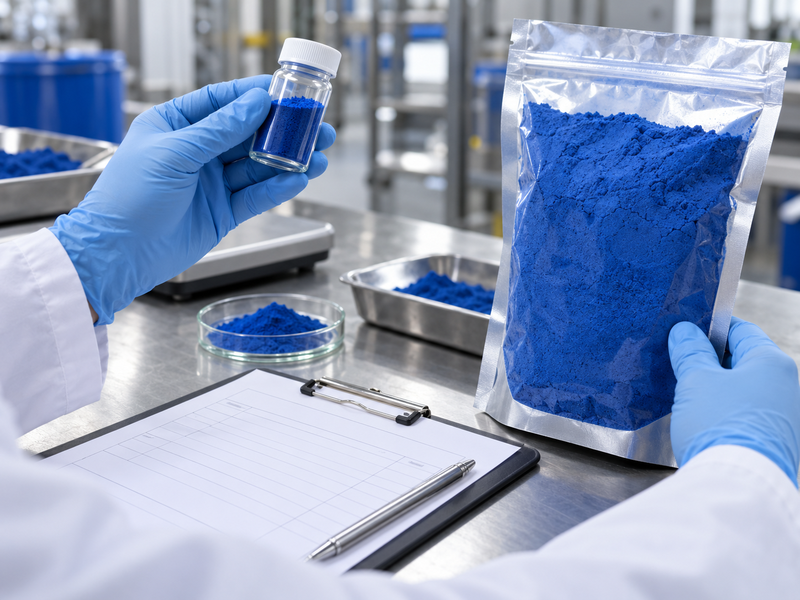
Blue extract powders may be formulated with carriers to reach a targeted color strength or handling property. The purchase specification should identify each component and its amount or permitted range. A brand needs this information to evaluate both color-additive mixture rules and finished-food ingredient labeling. Do not assume a color-value grade refers only to pigment. Likewise, do not infer that a carrier disappears legally because it is purchased inside a single supplier SKU. The full bill of materials matters.
A practical request: ask the supplier for the extract identity, carrier names, composition, allergen statement, processing aids disclosure, and lot-specific certificate. Then let label counsel decide whether and how each component appears on the finished label, considering applicable exceptions. A change from one carrier to another can trigger a new label proof even if finished blue shade appears identical. A factory quality discussion helps frame the document request, but the lot and formula records settle the wording question.
6. Does a front label claim replace the ingredient list?
Keep mandatory and voluntary text separate
No. A badge such as “colored with spirulina” or “no artificial colors” communicates a marketing claim, while the ingredient statement discloses ingredients under labeling law. Both must be accurate and reviewed independently. FDA issued a February 2026 enforcement-discretion letter on certain voluntary “no artificial colors” claims, but that letter did not repeal ingredient declaration duties or authorize a color in a food category outside the current use rule. A brand should not respond to the letter by removing color wording from the ingredients.
The review order matters: check whether the color additive may be used in the finished food, then settle the ingredient statement, then evaluate optional front-panel language. A voluntary claim can be false or misleading even where a color additive is permitted. Review other colors throughout the formula rather than only spirulina extract. Keep package artwork, website claims, and retailer fields aligned. If one panel says “spirulina powder” while the specification says aqueous extract with carrier, resolve the mismatch before printing.
| Question | Mandatory declaration | Voluntary claim |
|---|---|---|
| Is color added? | Address in ingredient labeling | May describe source |
| Are carriers present? | Evaluate each component | Avoid hiding them |
| Is a claim allowed? | Separate legal review | Substantiate finished food |
7. What if a food has a standard of identity?
Clear use authorization before label polish
Current 21 CFR 73.530 restricts use in foods with standards of identity unless the relevant standard authorizes the added color. A label phrase cannot make an otherwise disallowed use lawful. Product teams should determine whether the finished food is standardized, identify the exact standard, and check its color provisions. This question can arise even when the everyday product name resembles a permitted category. A yogurt-like food, for example, needs analysis of its legal identity and formula rather than an assumption based on the word “yogurt.”
Do this early: screen standards of identity while the color system is still being selected. If a concept changes from a non-standardized alternative to a standardized version, rerun the use and labeling review. The ingredient declaration then follows a valid formula, rather than becoming an attempt to justify it after the fact. Document the conclusion with the formula version, intended market, and date of rule review. This record saves time if an auditor or retailer asks why the color appears on the package.

8. How does the delayed 2026 order matter?
Do not label for a use that is not yet effective
The eCFR cross-reference to section 73.530 states that a February 2026 amendment was delayed indefinitely in March. As of October 22, 2026, the broader food-general expansion is not effective. The present category-specific use list remains the starting point for a U.S. label review. A draft label for a food outside that list cannot be approved merely because the artwork team found a February announcement. Use authorization and wording are related but distinct questions: good wording cannot cure an unauthorized application.
Put dates on approvals: save the current rule excerpt with the SKU and finished-food category analysis. Recheck regulatory status before a commercial print run because the delay could later be resolved. If a subsequent order becomes effective, assess its precise scope and date rather than assuming the old proposal applies unchanged. Until then, a reviewer should stop the label process at the use gate if no valid authorization is identified.
| Document | What it says | Label implication |
|---|---|---|
| Current §73.530 | Specific categories | Match finished food |
| February order | Broader amendment | Do not use while delayed |
| March delay | Indefinite delay | Recheck before launch |
9. What should label counsel receive?
Provide a complete, versioned product packet
Send the ingredient specification, extraction description, carrier composition, lot certificate, full formula, color use level, finished-food description, processing method, package artwork, and sales market. Include any proposed “natural,” “spirulina,” or “no artificial colors” claims. Counsel needs the complete package, because a color declaration cannot be judged in isolation from competing statements. Provide the exact supplier SKU rather than a sample brochure covering several grades. Note any changes pending after pilot scale.
The useful question to ask: what wording accurately conveys this added color and its components for this particular U.S. food? That focuses the review on a decision. A trade name can appear in supplier documents while the consumer label uses regulatory wording appropriate to the final formula. Record the reviewer conclusion and rationale in the artwork approval system. When supplier formulation or product category changes, reopen the file instead of assuming a previously approved phrase remains correct.
10. What is a defensible approval workflow?
Move from identity to use to wording
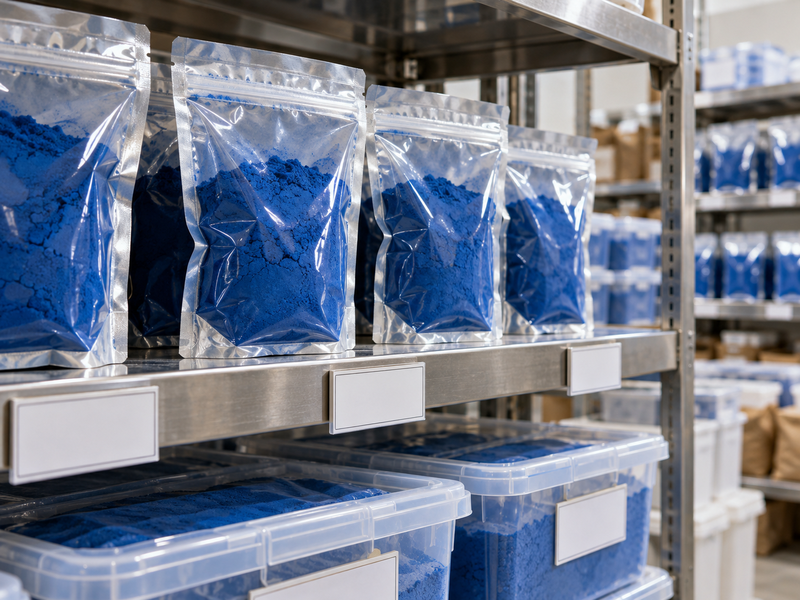
Identify the purchased material and all carriers. Confirm it meets the regulated identity and specifications. Match the final food to a currently permitted U.S. use and check any standard of identity. Draft ingredient language that communicates the color addition accurately, then separately assess voluntary claims. Have regulatory counsel approve the complete label and archive the dated sources. This sequence prevents a polished front panel from hiding an unresolved ingredient or category question.
Keep change control simple: a new extract grade, carrier, food matrix, label claim, or rule status should trigger review. Procurement can retain the supplier dossier, product development can record use level and purpose, and regulatory can sign off on the category and declaration. That division of work makes later questions answerable. A specific, tested, and documented statement serves both consumer understanding and commercial speed better than a generic “blue spirulina” line copied from a sales sheet.
| Gate | Required evidence | Output |
|---|---|---|
| Identity | Supplier composition | Qualified SKU |
| Use | Current rule and food category | Legal clearance |
| Wording | Full formula and label | Approved declaration |
| Maintenance | Change log and dated sources | Re-review trigger |
FAQ
Q1: Can “blue spirulina” automatically be the ingredient name? No. Verify the exact material and its U.S. labeling treatment.
Q2: Is spirulina extract the same as whole spirulina powder? No. The regulated color is a filtered aqueous extract.
Q3: Can “natural color” stand alone in the ingredient list? FDA’s cited policy objects to that wording for added colors.
Q4: Do carriers need review? Yes. Examine the full supplied mixture and the finished-food labeling rules.
Q5: Does a front label color claim replace ingredient disclosure? No. Review mandatory and voluntary text separately.
Closing decision
A sound spirulina extract declaration begins with a qualified ingredient and a permitted use, then moves to exact wording for the final food. Ask the supplier for full composition, give counsel the complete formula, and date every approval. That keeps a trade name from becoming an unsupported legal conclusion.