
Food-color buying involves both a color test and a legal identity check. “Spirulina extract food coloring” is useful shorthand, but a compliant finished product depends on the permitted use, the actual ingredient preparation, and the tests used to release each lot. Procurement and regulatory teams should sign off against the same grade specification and finished-food formula.
1. What counts as spirulina extract food coloring?
For a US food-color use, the material must correspond to the regulated spirulina-extract identity and applicable specifications
A vivid blue powder with an algae image on the brochure is not enough. Request the full ingredient and processing description.
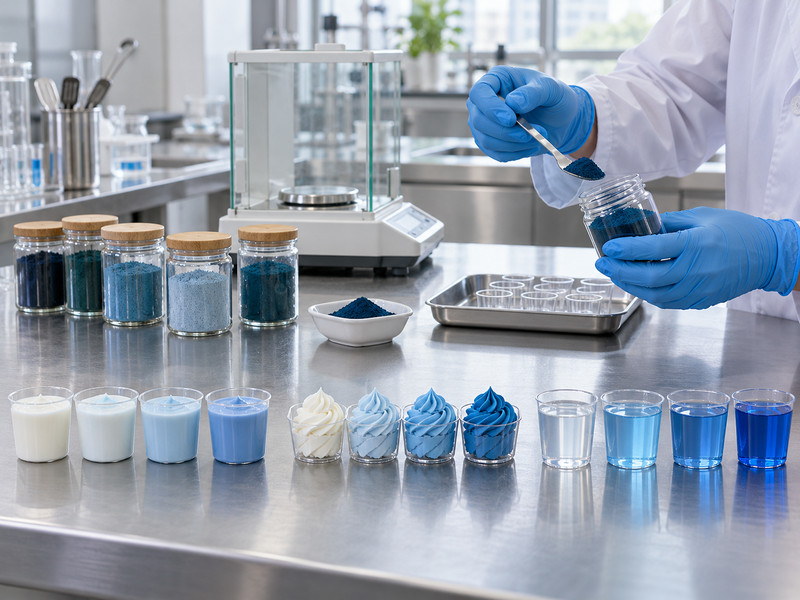
Put a sample next to its paperwork before making a decision. Record the supplier’s exact grade name, ingredient statement, lot number, and the intended technical function in the finished product. Ask whether the material is whole biomass, a phycocyanin-rich extract, or a formulated preparation. This distinction changes the likely shade, dose, flavor, and label. If a specification says only ‘blue spirulina’ without an assay method or composition, send it back for clarification. The procurement record should make sense to someone who did not attend the original sales call.
A strong pigment sample can still be the wrong hue for the product. Review color alongside the uncolored base and a physical benchmark under controlled light.
2. How does a color additive differ from a supplement?
The intended technical function and regulatory pathway matter
A health study on spirulina does not establish color-additive compliance, and a color authorization does not permit medical claims. Keep safety, labeling, and claims files separate.
Write the product brief in terms of a real consumer unit: a drink after filling, a candy after wrapping, or a cosmetic after its stability interval. Include recipe pH, processing temperature, holding time, background color, package, shelf life, market, and target price. These numbers and constraints let a supplier recommend a sensible grade. Without them, two seemingly identical samples may be tested under completely different conditions. Keep a small uncolored batch as a control; it helps distinguish pigment behavior from changes in the base recipe.
Set shade and opacity targets separately. A transparent blue drink and an opaque blue yogurt can use the same ingredient yet need different doses.
| Decision point | Evidence to retain | Decision or check |
|---|---|---|
| How does a color additive differ from a supplement | Source and composition file | Does the chosen material fit this recipe? |
| Which documents should accompany a color sample | Formula revision and pH record | Was the target matrix actually tested? |
| Changed recipe | Dated decision and retained record | Retest shade and sensory |
3. Which documents should accompany a color sample?
Request a technical specification, current-lot COA, ingredient statement, process summary, recommended storage, and information on intended-market compliance
Check whether the sample lot matches the documentation. A generic certificate cannot qualify an untested shipment.
A certificate of analysis is useful only when its methods, limits, units, and lot number can be understood. Ask how the blue fraction is assayed and whether a reported value refers to the pigment, total protein, or another basis. Verify moisture, microbial, and relevant contaminant results against the risk assessment for the intended use. If the supplier uses a code such as E3 or E40, request the actual specification rather than interpreting the code as a concentration or purity percentage. Compare like with like across candidates.
Record the assay method and color measurement geometry; comparisons from different instruments or sample thicknesses can mislead the team.
4. How should strength and shade be measured?
Use a defined method and the actual food matrix
A transparent solution can overstate how blue the color will look in yogurt or confectionery. Measure the final product after its normal process and at relevant storage points.
Build a bench trial that isolates the ingredient from other changes. Use one base batch, weigh the addition accurately, and change only one variable per sample. Photograph it with a neutral color reference under fixed lighting and record the dose per finished serving. Taste and physical stability need their own observations. A supplier’s recommended dosage is a starting range, not a validated addition rate for every formula. The final decision should be made after the ingredient goes through the actual production sequence.
Sample at the production dose, not only a visually dramatic high level. The planned serving should meet both cost and sensory limits.
| Decision point | Evidence to retain | Decision or check |
|---|---|---|
| How should strength and shade be measured | Dose ladder and color reference | Was the target reached at a viable dose? |
| Why do process conditions matter | Process temperature and time log | Did the result survive manufacturing? |
| Changed process | Dated decision and retained record | Repeat the color trial |
5. Why do process conditions matter?
Heat, acidity, light, and oxygen can affect a phycocyanin-rich color
Review published stability work to design trials, then make the decision from your product data. Ingredient strength at receipt is only the starting point.
The published review of phycocyanin stability describes sensitivity to conditions such as temperature, pH, and light. It is valuable for choosing stress conditions, yet it cannot predict the exact shelf life of a proprietary recipe. Measure the finished item at defined time points in its final package. Include realistic transport and retail exposure where relevant. Log visual shade and an instrument reading if available; neither alone captures taste, microbial quality, or physical separation.
A stability trial must include the actual light-exposure profile. Clear packaging can create a different outcome from an opaque laboratory container.
6. What safety specifications are relevant?
Review microbial, elemental, toxin, and identity controls against the applicable regulation and internal risk assessment
In the United States, the 2026 final order updated certain specifications. Make the current rule, not an old sales sheet, the reference.
Sensory and operations staff should participate early, not after the color has been approved. Note off-odor, aftertaste, sediment, line residue, filtration loss, and cleanability in the trial sheet. A small laboratory sample can hide a problem that becomes expensive at plant scale. If a change to the carrier or addition point solves one problem, repeat the color and safety checks. Calculate total cost per acceptable finished unit, including waste and testing, instead of using the quoted powder price as the sole comparison.
The best shade after mixing may not be the best shade after storage. Evaluate a candidate’s performance at the end of the agreed shelf life.
| Decision point | Evidence to retain | Decision or check |
|---|---|---|
| What safety specifications are relevant | Blind sensory panel and reference | Is the finished product acceptable? |
| Which foods may use the color | Current-lot COA and risk plan | Can the lot be released safely? |
| Changed carrier | Dated decision and retained record | Repeat sensory and label review |
7. Which foods may use the color?
The FDA expanded permitted uses in 2026, but exceptions and standards of identity still require attention
Some foods are subject to separate USDA oversight. Regulatory staff should confirm the exact application before assuming the expansion covers it.
Quality release begins with traceability. Obtain a current-lot COA, agreed specification, and enough source information to confirm the preparation is the one tested. The FDA’s discussion of microcystins explains why contamination controls matter for blue-green-algae products. Decide which hazards require every-lot testing and which are controlled through a verified monitoring plan. A vivid color does not demonstrate absence of unwanted microorganisms, toxins, or elemental contaminants.
For a regulated food color, current-lot identity and purity tests are part of the release decision. Color strength is only one acceptance criterion.
8. How should label language be chosen?
The ingredient declaration must match the regulated material and local requirements
Carriers and other constituents may affect the full declaration. Have the proposed label reviewed in the destination market before printing packaging.
The regulatory reviewer needs the exact ingredient, technical function, food or cosmetic category, intended market, and proposed label. For US food-color uses, read the current FDA order on spirulina extract, including its exceptions and specifications. A color authorization is not a permission for a health claim. Different countries can classify the same material differently. Keep the decision dated and tied to the approved formula so future ingredient changes trigger review.
Do not turn the word natural into a legal conclusion. The permitted declaration and use depend on the applicable market and exact preparation.
| Decision point | Evidence to retain | Decision or check |
|---|---|---|
| How should label language be chosen | Market-specific rule review | Is this use covered by current rules? |
| What constitutes a convincing plant trial | Approved label and full composition | Does the declaration match the grade? |
| Changed destination market | Dated decision and retained record | Recheck permitted use |
9. What constitutes a convincing plant trial?
Use the same process, dose, and packaging intended for launch
Record color immediately and at shelf-life pulls, as well as sensory, microbial, and physical observations. Keep controls and retained samples for investigation.
A pilot trial should answer a purchase question rather than merely make an attractive photograph. Define an acceptable color range, a maximum off-note, a physical-stability limit, and the sampling schedule before starting. Use the planned equipment and package, and retain samples from the tested ingredient lot. Compare against an uncolored control and, if possible, the current commercial benchmark. If a sample fails, record whether the failure came from the material, process, or finished-food matrix before changing suppliers.
Have production and quality staff sign the same pilot report. This exposes tradeoffs between shade, line behavior, and release criteria early.
10. What should the supplier agreement protect?
Name the exact grade, quality limits, analytical methods, traceability records, and notification requirements for changes
Include a remedy for out-of-spec lots. A visual sample approval should not override written specifications.
Make the final decision against written criteria: technical performance, legal fit, supplier records, capacity, change control, and cost at the use level that passes the shelf-life test. Ask for advance notice of changes to source, carrier, site, or process. Keep the approved sample and its analytical file available to receiving and quality teams. This prevents a future shipment with the same marketing name but different formulation from being treated as automatically equivalent. A small qualification effort now can avoid a much larger recall or rework later.
Retain the winning lot as a standard and define a change threshold. Visual approval without an instrument or written conditions is difficult to repeat.
| Decision point | Evidence to retain | Decision or check |
|---|---|---|
| What should the supplier agreement protect | Pilot and shelf-life report | Can production repeat the result? |
| What should the supplier agreement protect | Signed specification and change notice | Will future lots remain equivalent? |
| Changed supplier | Dated decision and retained record | Requalify the new lot |
Five quick questions about spirulina extract food coloring
What counts as spirulina extract food coloring? For a US food-color use, the material must correspond to the regulated spirulina-extract identity and applicable specifications. A vivid blue powder with an algae image on the brochure is not enough.
How does a color additive differ from a supplement? The intended technical function and regulatory pathway matter. A health study on spirulina does not establish color-additive compliance, and a color authorization does not permit medical claims.
Which documents should accompany a color sample? Request a technical specification, current-lot COA, ingredient statement, process summary, recommended storage, and information on intended-market compliance. Check whether the sample lot matches the documentation.
How should strength and shade be measured? Use a defined method and the actual food matrix. A transparent solution can overstate how blue the color will look in yogurt or confectionery.
Why do process conditions matter? Heat, acidity, light, and oxygen can affect a phycocyanin-rich color. Review published stability work to design trials, then make the decision from your product data.
A practical next step
For a spirulina extract food coloring project, send the target application, process, destination market, and requested documentation to the ingredient supplier. Ask for a current-lot sample and technical file, then qualify the material in the finished product before approving copy or a purchase order. Review our spirulina and blue extract powder range and request the specific grade information needed for your formula.