
A phycocyanin factory audit checklist should establish whether the supplier can deliver an approved grade with reliable evidence. A facility tour cannot replace process records, test methods and a map of who makes, packs, releases and exports the product. This checklist helps food and beverage buyers plan a desk review or on-site assessment without assuming that every facility uses the same process.
Spirulina CN’s About page presents manufacturing and quality roles and describes an international sales team as the commercial interface. Treat that as a supplier statement to verify for the contracted SKU. Ask for site names, legal entities and current documents so the audit follows the actual product path. US buyers should separately assess whether the FDA supplier verification provisions apply to their business and ingredient.
Contents
- What is the audit scope?
- Who performs each manufacturing role?
- How is incoming biomass controlled?
- What should extraction and drying records show?
- How are hygiene and cross-contact managed?
- How should laboratory competence be checked?
- What links the lot to its release decision?
- How are deviations and changes handled?
- What evidence supports export handoff?
- How should findings drive approval?
1. What is the audit scope?
Define product, sites and decision
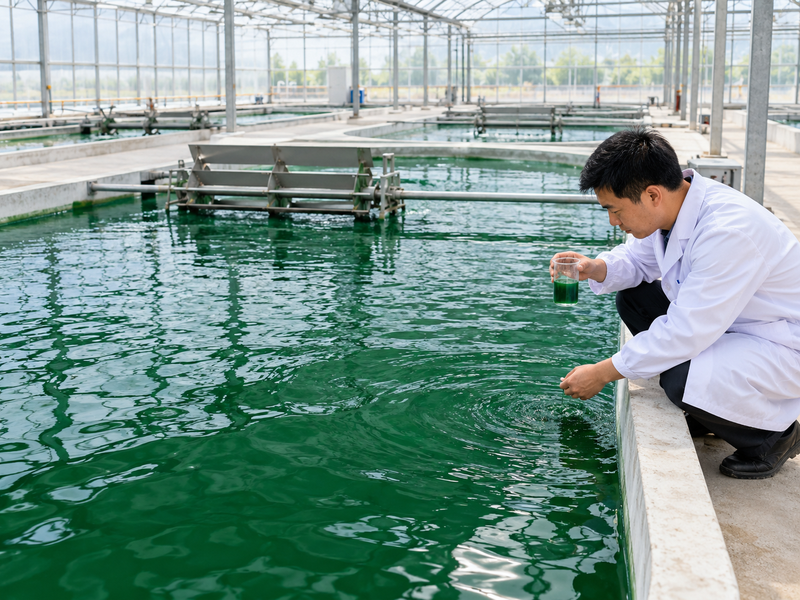
Begin with the exact ingredient specification, target grade, carrier system, packing format and destination market. Ask the supplier for a flow diagram that starts with the source material and ends at the packed export lot. Mark every facility, contractor and handoff on that diagram. An audit must cover the actual extraction, laboratory and packing sites. Decide whether the review is for initial qualification, a new SKU, a changed process or a recurring supplier reassessment. The evidence needed differs for each decision.
Put the scope in writing before requesting documents. Specify whether the auditor will review quality systems, food safety controls, analytical methods, traceability, complaint handling and export records. Arrange for records from a recent representative lot, with commercially sensitive details redacted where necessary but with the links still visible. The FDA’s discussion of third-party audits and supplier verification distinguishes audit tools and regulatory purposes; a generic certificate does not settle every buyer question. Apply any legal requirement only after checking the product, market and buyer role.
| Scope item | Ask for | Decision it supports |
|---|---|---|
| Exact SKU | Current specification and composition | Is this the approved grade? |
| Sites | Named production and packing locations | Where should evidence come from? |
| Contractors | Activity and quality agreement | Who controls outsourced steps? |
| Destination | Intended market and use | Which requirements need review? |
2. Who performs each manufacturing role?
Follow the product, not the brand name
One commercial name can cover several legal and operating entities. Ask who cultivates or sources the spirulina, who extracts the color, who blends in any carrier, who performs final testing, who packs the units and who issues the certificate of analysis. Then ask who is the seller of record and who prepares export documents. Record each role in an organization map with site address and contact. If a step is subcontracted, request the supplier’s approval and oversight procedure for that contractor. The aim is to know whose controlled records support the lot being purchased.
The Spirulina CN factory page describes manufacturing capability, while the About page describes commercial roles. These pages provide a starting list of claims, not evidence that a particular shipped lot passed through a particular line. Confirm the route for the SKU under discussion. A buyer can request redacted purchase and transfer records, packing records and a lot genealogy rather than asking for proprietary formulas. Identify the person authorized to approve specifications and the person authorized to release a lot; those decisions should not be ambiguous between factory and exporter.
| Role | Evidence to sample | Audit question |
|---|---|---|
| Source control | Supplier or cultivation records | Is the input identifiable? |
| Extraction | Batch process record | Is the output linked to input? |
| Final blending | Formula/version record | Is the declared composition current? |
| Quality release | Signed release record | Who approved shipment? |
| Export coordination | Invoice/document workflow | Who reconciles the order? |
3. How is incoming biomass controlled?
Inspect acceptance before extraction
The audit should look upstream of the finished blue powder. Ask how the facility defines acceptable incoming biomass or extract intermediate, which hazards it considers, and what identity and condition checks occur at receipt. Review one representative intake record against its supplier approval file, quantity, lot code and disposition. If the material is held before extraction, inspect storage conditions and how nonconforming lots are physically and electronically prevented from use. A claimed “controlled source” is credible when the system can show the source and the decision on a real lot.
Risk assessment should reflect the input and process. Buyers often ask about contaminants, microbiological quality and unwanted cyanobacterial toxins, but the precise testing plan and limits depend on ingredient, jurisdiction and intended use. Do not accept a generic “tested safe” statement in place of analytes, methods, limits and lot results. Ask which checks are performed internally and which by an external laboratory. If a source changes, determine whether the facility requires a new qualification, process trial or finished-color comparison. That decision is part of change control, because source variation can affect both safety assessment and finished-product shade.
4. What should extraction and drying records show?
Connect parameters to released product
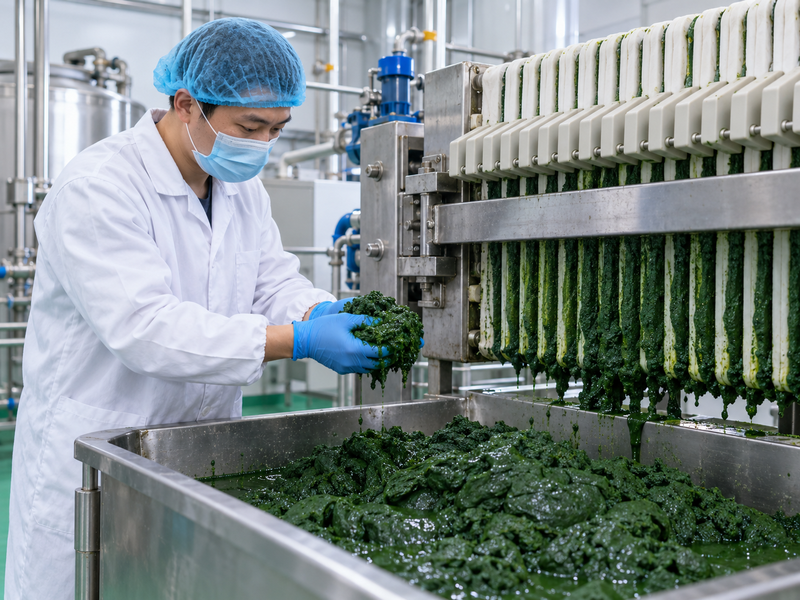
Request a process flow and a redacted batch record for a lot of the target grade. The record should identify the starting material, equipment, important process stages, intermediate quantities, checks, deviations and final yield. Ask the process owner which parameters are monitored because they affect color strength, carrier content or microbiological quality. The auditor does not need to copy proprietary settings; it does need to establish that approved ranges exist, measurements are recorded and out-of-range events receive a documented decision. Check whether operators use current instructions and whether changes are authorized.
For drying and packing, review how the plant prevents mix-ups between grades. Different nominal color strengths may use different concentration or blending steps, and a label error could be commercially serious even if the powder looks blue. Walk through cleaning, line clearance and reconciliation of input and packed units. Ask how the process team assesses a rework or reblend and whether it creates a new lot or retains the original code. A finished COA by itself cannot show that production followed the approved route. Record which batch documents are available for future investigations, and the retention period agreed in the quality arrangement.
| Process record | What to verify | Example concern |
|---|---|---|
| Input reconciliation | Lots and quantities | Unexplained material source |
| Parameter log | Approved ranges and actuals | Unassessed excursion |
| Grade changeover | Clearance and cleaning | Wrong-grade carryover |
| Output reconciliation | Packed units and losses | Untracked material |
5. How are hygiene and cross-contact managed?
Review what operators actually do
Observe the path through receipt, extraction, drying, blending and packing, where access is allowed. Look for segregation of raw and finished materials, cleaning status, equipment condition, pest control and controls on tools or personal items. Ask how the facility prevents dust migration between different grades or other products on shared equipment. If the supplier makes allergen or carrier declarations, examine how those statements connect to the site’s product list, supplier declarations, cleaning validation or verification and label review. Do not infer an allergen-free status from a tidy room.
Review one sanitation record alongside the area it covers. Can the team show who cleaned, who checked and what happened when a check failed? Ask how environmental or product monitoring results influence release or corrective action. The US food CGMP provisions provide a useful legal reference where applicable, but an international buyer should evaluate the rules of its own destination and use. The audit report should describe observed practices and records.
6. How should laboratory competence be checked?
Review methods as well as results
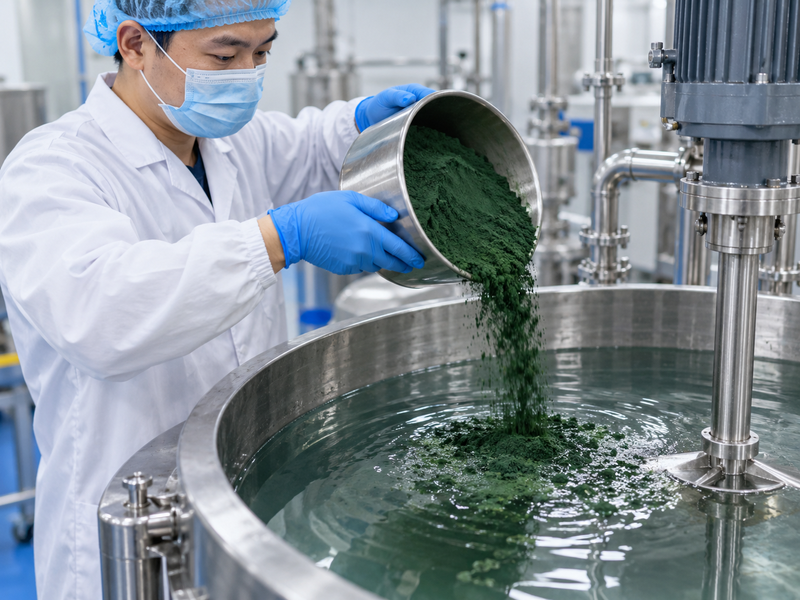
Choose tests that drive the purchase specification: color value or phycocyanin assay, microbiology, selected contaminants, moisture and carrier-related composition where relevant. For each, request the method identifier, sample preparation, calibration or reference material, reporting units, acceptance limit and what happens with an invalid result. Ask to see a recent lot’s raw or summary record, not only a polished certificate. When a method is outsourced, confirm the laboratory’s scope and the supplier’s review of the report. An accreditation certificate is informative only when it covers the relevant method or analytical field.
The auditor should understand how a sample represents the lot. Ask how many containers are sampled, at what stage, whether samples are composited and how retain material is stored. Examine out-of-specification procedures: a passing retest should not erase the first failure without a documented investigation. Compare a known reference sample with current production if color consistency is critical in the finished food. The audit is not a competition to collect the most test names; it is an assessment of whether methods and limits answer the buyer’s actual quality and safety questions.
| Test area | Method detail to request | Buyer use |
|---|---|---|
| Color strength | Wavelength, dilution, reference | Compare grades consistently |
| Microbiology | Method, unit, sampling | Apply approved limits |
| Contaminants | Analytes, detection limits | Review destination fit |
| Composition | Carrier and assay basis | Match label and dose |
7. What links the lot to its release decision?
Trace a real order both ways
Select a commercial lot and trace it backward from labeled pack to packing record, finished test sample, batch record and source lots. Then trace forward from that lot to shipped pallets, invoice and customer. Verify that certificate number, lot code and quantities reconcile. If several source lots feed one finished lot, the genealogy should show the proportions or quantities and resulting output. Ask how retain samples are labeled and accessed during a complaint. A spreadsheet can work if controlled and complete; specialized software is not a prerequisite for a convincing trace.
Review the actual release step. Who checks that specifications are current, deviations are closed, required tests pass and the packed units match the order? Is there a documented authorization before the warehouse marks material available to ship? The FDA traceability lot code explanation illustrates how identifiers link records in contexts covered by its rule; do not assume this ingredient automatically falls under that particular additional-traceability rule. The buyer’s operational requirement is straightforward: a problem with one lot must identify affected units and customers without relying on memory.

8. How are deviations and changes handled?
Test the system with examples
Ask for anonymized examples of a process deviation, an out-of-specification result, a customer complaint and a proposed change. For each, follow the record from discovery to containment, investigation, product disposition, corrective action and effectiveness check. The explanation should identify who can approve the decision and whether the customer was notified where the quality agreement requires it. A neat procedure is less persuasive than a completed record showing that material did not ship while its status was unresolved. Avoid demanding a zero-deviation history; a functioning system finds and manages problems.
Change control matters when the buyer has qualified a specific color performance. Ask which changes require notice: biomass source, extraction or drying route, carrier, test method, packing construction, production site, subcontractor and product name. Agree on notice timing and the data required to assess equivalence, without assuming a universal number of days. A meaningful change package may include old and new specifications, side-by-side lot data and an application trial. Record the approval route so sales cannot substitute a grade merely because its nominal color value looks close. This protects the food manufacturer’s own labels and process validation.
| Change | Likely evidence | Buyer decision |
|---|---|---|
| Carrier | Composition and label review | Approve or reject |
| Test method | Correlation and units | Rebaseline limits |
| Site | Audit or document review | Requalify route |
| Pack | Barrier and handling trial | Approve configuration |
9. What evidence supports export handoff?
Extend the audit past the factory gate
The manufacturer’s release is only one stage of a cross-border order. Ask who checks the purchase specification against the sales order, who issues the invoice and packing list, and who resolves a discrepancy between the factory lot record and export label. Review a redacted completed order to see whether product name, SKU, lot, net mass and package count remain consistent. The exporter should know which documents it can supply and which destination-specific requirements must be confirmed by the importer or broker. Do not treat a past shipment to one country as proof that the same dossier works elsewhere.
If a trading company coordinates the sale, request a written map of responsibilities between it, the manufacturer and any freight provider. Spirulina CN publicly describes such a commercial coordination role, but the buyer should confirm it in the contract and order file. Identify who handles complaints, replacement decisions and urgent trace requests after arrival. Check how the exporter protects documents from version drift: an outdated specification sent with a new lot can undermine the factory’s good work. The audit may end with an action for the exporter as well as for the plant.

10. How should findings drive approval?
Convert observations into a controlled decision
Write findings against evidence and the agreed criterion. Distinguish a missing document, an unverified claim, a minor record weakness and a failure that could affect product identity or safety. Give the supplier a chance to supply the underlying record and a corrective plan, but do not call an unobserved control effective simply because it was described in an interview. Set owners and dates for actions. Procurement should see the decision status: approved, conditionally approved for a defined order or application, or not approved. Quality should retain the audit record and the rationale.
A follow-up can be a document review, a remote demonstration or another site visit, depending on the finding. Reassessment should be triggered by meaningful changes and supplier performance, not only a calendar date. The FDA’s FSVP overview describes US importer duties where that rule applies; the importer must determine its own obligations. For every buyer, the practical end point is the same: the approved supplier file should identify the exact SKU, sites, current specification, key evidence, open actions and who can authorize the next purchase.
FAQ
Q1. Is a certification badge enough to approve a factory? No. Check certificate validity and scope, then review records for the exact product and route.
Q2. Must every buyer visit the site? The review method depends on risk, legal duties and available evidence. A desk review may need escalation when critical controls remain unverified.
Q3. Can the exporter issue the COA? It may transmit the document, but ask who performed tests and authorized lot release.
Q4. Should an audit require proprietary process settings? Usually the buyer needs control evidence and deviation handling, not a copy of trade secrets.
Q5. What is a useful first audit sample? One recent commercial lot with matching batch, test, pack, release and shipment records.
Request a product-path evidence pack
Send Spirulina CN the target grade, use and destination, then request the current specification, site-role map, representative lot documents, applicable quality-system evidence and the contact for technical questions. Use those records to set an audit scope and close findings before placing a routine supply order.