
Open pond vs photobioreactor spirulina is a comparison of two ways to grow whole Arthrospira biomass. Buyers can easily mistake a system label for a quality guarantee, then find that an attractive sample has weak lot records. A better route is to compare controls, actual batch evidence and the finished powder against one purchasing specification. The FAO production review describes cultivation, harvest and food safety as linked operations; its framework supports asking what happened after cultivation as well as inside the vessel.
Contents: 1 · 2 · 3 · 4 · 5 · 6 · 7 · 8 · 9 · 10
1. What does each cultivation system actually contain?
Trace the boundary around the culture
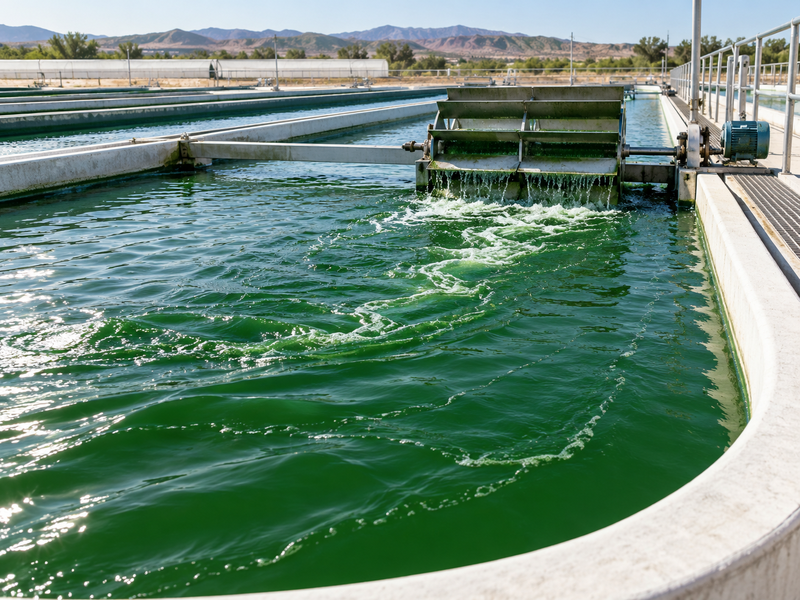
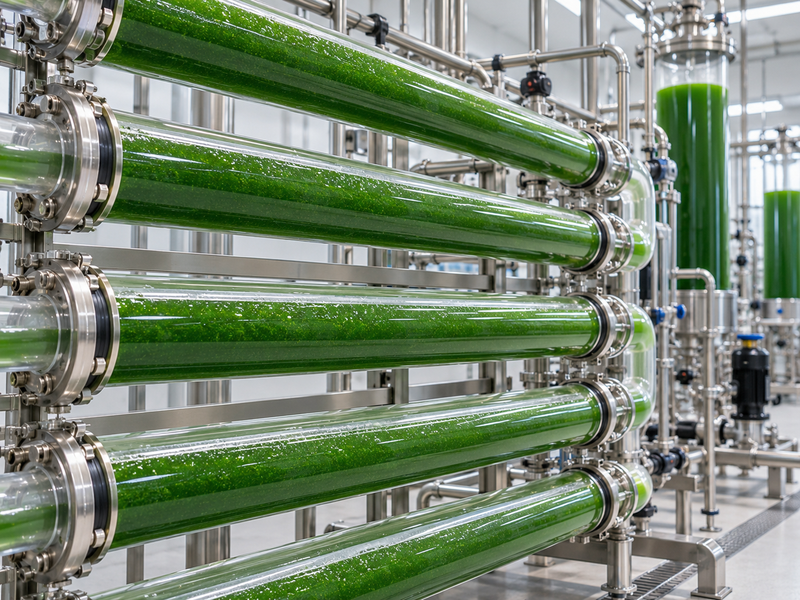
An open raceway pond is a shallow circulating culture exposed to the surrounding environment. A photobioreactor, or PBR, uses a more enclosed illuminated vessel with managed inputs and outputs. Neither definition describes a complete food manufacturing process. Water preparation, nutrients, inoculum, harvest equipment, drying and packaging still determine whether a particular lot meets a buyer’s specification. Here is the practical point: ask a supplier for a process map, not a photograph of a pond or a glossy reactor tube.
That map should name every material entering the culture, the points at which operators intervene and the route from vessel to finished bag. One facility may use enclosed seed cultivation followed by open production; another may run a fully enclosed growth stage but open transfers downstream. Ask for the exact system used for the offered SKU and lot. A side-by-side cultivation study compared open raceways, reactors and a hybrid system, illustrating why real operating arrangements deserve more attention than a two-word label.
| System question | Pond evidence | Reactor evidence |
|---|---|---|
| Culture boundary | Cover, access and surroundings | Seals, vents and transfers |
| Mixing | Paddlewheel operating record | Pump and circulation record |
| Inputs | Water and nutrient logs | Water, nutrient and gas logs |
| Harvest | Pond-to-lot linkage | Vessel-to-lot linkage |
2. How does each system control the growing conditions?
Review set points and excursions together
Temperature, light, pH, mixing and nutrient supply shape culture performance. An enclosed vessel may offer tighter control over some inputs, while an outdoor pond responds more directly to weather. Yet controlled equipment only helps when sensors are calibrated, operators act on alarms and deviations are recorded. Request operating ranges, monitoring frequency and a sample exception report for the same production period as a proposed lot. A useful test: can the supplier show what happened on an unusually hot or cloudy day?
Do not demand a universal target borrowed from a research paper. Strain, location, vessel design and recipe affect workable ranges. Instead, compare the supplier’s own approved ranges with actual trend charts and the final product results. Ask how a culture is held, diverted or discarded after an excursion. The FAO review describes commercial cultivation as a managed sequence rather than a fixed recipe. A credible answer connects the culture reading, corrective action, harvest decision and lot release. A neat control panel alone cannot make that link.
3. Which contamination risks change with the vessel?
Separate exposure from verified safety
Open surfaces allow more contact with airborne material, birds and nearby activity. Enclosure can reduce some exposure but introduces its own concerns: biofilms in tubing, poorly cleaned fittings, failed seals and contaminated transfers. Research on open-pond Spirulina in Cameroon examined microbiological outcomes under specific semi-controlled conditions. Its results show that culture management and testing matter; they cannot rank every commercial pond against every reactor.
Ask how the facility checks culture identity, foreign organisms and relevant toxins before harvest. Then review finished-lot microbiology and contaminant testing. FDA explains that blue-green algae products can be affected by microcystins and emphasizes applicable manufacturing controls. The buyer should request a documented, risk-based prevention and release plan. The decisive question: what evidence demonstrates the offered lot is acceptable, regardless of where it grew? A reactor label cannot replace that evidence, and a pond label does not by itself disqualify a controlled facility.
| Risk | Preventive control to ask about | Lot evidence |
|---|---|---|
| Unwanted organisms | Access, sanitation, culture checks | Monitoring and release results |
| Waterborne contaminants | Incoming-water approval | Water and powder results |
| Cross-lot carryover | Cleaning verification | Equipment and batch records |
| Environmental ingress | Barrier inspection | Deviation history |
4. Does a closed reactor automatically produce cleaner powder?
Follow the biomass past cultivation
No. Once biomass leaves a vessel, it may pass through hoses, screens, holding tanks, a dewatering step, a dryer and a filling room. Each transfer can add a hygiene or traceability risk. A buyer should inspect the route from the last culture reading to the sealed package. Ask whether equipment is dedicated or shared, how cleaning is verified and how long wet material waits before drying. This is where comparisons sharpen: two facilities with identical reactors may have very different post-harvest controls.
Request a representative batch record showing harvest time, intermediate identification, sanitation status, drying run and packaging code. The record should let a quality reviewer trace the finished bag backward to the culture vessel and forward to other bags from the same lot. If a supplier cannot explain how material from several harvests is pooled, the buyer may not know which test result applies to the shipment. The final decision belongs to the whole manufacturing route, supported by actual sample testing and site controls.
5. How should buyers compare capacity and supply resilience?
Ask for constraints rather than headline output
A pond may offer broad surface area with relatively straightforward scaling, while enclosed systems can require more vessel area, cleaning time and capital per unit of capacity. Actual supply depends on local sunlight, seasonal conditions, growth rates, harvest schedule, maintenance and yield after drying. A nameplate figure does not tell a buyer how many conforming kilograms are available every month. Ask for recent monthly production and rejection trends with commercially sensitive figures redacted if necessary.
For a repeat purchase, map the demand profile to the supplier’s ability to reserve material, hold safety stock and replace a failed lot. A factory that can make one excellent pilot sample may still miss a recurring contract during seasonal changes or reactor maintenance. Make the comparison concrete: request the lead time for a sample, a initial commercial order and a replenishment order. Record the minimum batch size and whether lots are blended. These questions address delivery risk without assuming one cultivation technology always wins.
| Capacity claim | Follow-up document | Decision use |
|---|---|---|
| Annual tonnage | Monthly conforming output | Seasonality |
| Short lead time | Recent order schedule | Reliability |
| Flexible batching | Lot definition and blending rule | Traceability |
| Backup capacity | Qualified alternate line | Continuity |
6. What does the cultivation system mean for landed cost?
Compare cost per usable kilogram
PBRs can require vessel, pumping, cleaning and energy investment. Ponds can require land, water management and more environmental monitoring. These are cost categories, not a universal price ranking. The relevant number for a food brand is the landed cost of powder that passes the agreed specification and works at the chosen use level. Ask for a quote on the same grade, pack format, delivery term and testing scope before comparing unit prices.
Include sample approval costs, independent tests, freight, import duties where applicable, yield loss in your process and disposal cost for failed material. A lower quoted price can be expensive if off-spec lots interrupt production. Conversely, a premium for enclosure needs a measurable advantage in documentation, consistency or application performance. Here is a sound rule: pay for demonstrated performance, not the vessel story alone. Keep the commercial model separate from scientific conclusions; a cultivation study cannot establish a supplier’s current price or capacity.
7. Which documents let a buyer test the supplier’s story?
Build a linked evidence pack
Request a current product specification, process flow, food-safety plan summary, representative batch record and actual certificate of analysis for the sampled lot. The specification should identify whole biomass rather than phycocyanin extract; those are different products with different uses. The COA should include identity, composition and contaminants appropriate to the destination and intended use. Ask which results come from an internal lab and which from an independent one. Read across documents: a lot code on the sample must match the code on its analytical report.
Where a site makes claims about its production methods, treat those as site statements until current batch and facility documents verify them. The Spirulina CN site can introduce its product range, but its general marketing descriptions cannot establish the status of a specific shipment. Request records for the offered SKU, date and origin. A supplier willing to show a controlled process map and a complete deviation trail gives quality teams a more useful basis than a generic “closed system” badge.

| Document | Match it against |
|---|---|
| Specification | Approved grade and intended use |
| Process flow | Actual vessel and harvest route |
| COA | Sample and offered production lot |
| Deviation record | Lot disposition and release signature |
8. How can a pilot trial reveal differences that paperwork misses?
Use matched samples in the real formula
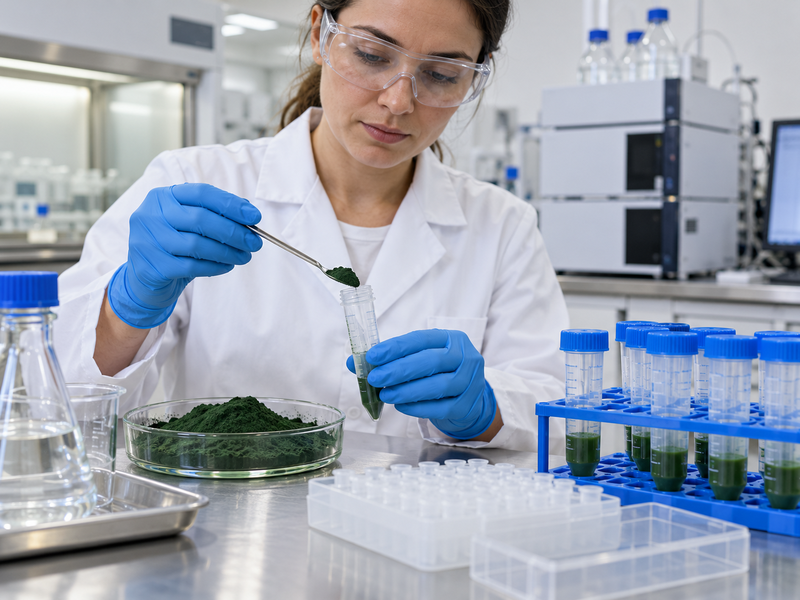
Obtain sealed, representative samples of both proposed grades. Store and handle them alike. Test the attributes that matter to your process: dispersion, color, odor, flavor contribution, sediment, powder flow or compression behavior. Measure them after the actual heat, pH and packaging steps, not only in a glass of water. An application trial answers whether a particular dried biomass works for your product; it does not prove every lot from the same cultivation system will behave the same way.
Record sample code, laboratory results, inclusion level, process conditions and evaluation date. Use a blind sensory review if color or odor could bias judgment. If a pilot lot wins, define acceptance limits around measurable attributes and require a pre-shipment sample from the initial commercial run. Do not skip the bridge: supplier qualification is complete only when a production lot matches the approved trial sufficiently for manufacturing. Repeat trials after significant process changes, such as a new dryer or a switch between pond and reactor.
9. What belongs in a fair comparison scorecard?
Weight the risks of your finished product
Create a scorecard before reviewing sales claims. Put mandatory gates at the outset: legal suitability, ingredient identity, contaminant criteria and traceable lot release. Then score application fit, consistency, lead time, documentation and total cost. For a beverage brand, suspension and sensory performance may carry more weight than tablet flow. For a tablet maker, density and compressibility may dominate. The same supplier can be a strong fit for one project and a poor fit for another.
Use an explicit evidence column. “PBR reduces contamination” is a hypothesis until the facility provides monitoring and finished-lot results. “Pond is cheaper” also needs a like-for-like quotation. A comparative cultivation experiment shows that controlled comparisons require consistent conditions; a procurement comparison should follow the same logic. Keep it honest: mark missing evidence as missing rather than turning it into a favorable or unfavorable assumption.

| Criterion | Required evidence | Suggested gate |
|---|---|---|
| Identity and safety | Current lot tests | Pass or hold |
| Process control | Trend and deviation records | Review |
| Formula fit | Matched pilot trial | Pass or reformulate |
| Delivery | Capacity and lead-time record | Contract term |
10. When should a buyer approve either route?
Approve the documented grade and line
Approve a supplier when the offered grade, specific production line and actual lot records satisfy your requirements. Your agreement should define notification of changes in cultivation system, water source, harvest process, dryer and test method. It should also establish sampling rights, retain samples, corrective-action timing and what happens to disputed goods. If the supplier plans to switch from pond to reactor or back, review the new route as a change, even if the marketing name stays the same.
The decision can be simple without being shallow. Pick the route that delivers conforming powder consistently, supplies evidence promptly and survives a real product trial at an acceptable total cost. One final check: repeat the document and sample review on the initial commercial shipment. The FAO review treats production and food safety as connected; your purchasing approval should do the same. A cultivation vessel begins the story. The sealed lot and its record finish it.
FAQ
Q1: Is a PBR always safer than an open pond? No. Enclosure can change exposure, but sanitation, monitoring, harvest and finished-lot results determine whether a shipment meets specification.
Q2: Can pond-grown biomass qualify for food use? Yes, if the actual material, process controls and market-specific requirements meet the buyer’s approved criteria.
Q3: Should both systems use the same release tests? Start with the same intended-use specification, then add risk-based checks for each facility and route.
Q4: Does a reactor guarantee stronger color? No. Strain, growing conditions, drying and storage also affect color; compare actual lots in your formula.
Q5: What is the fastest useful supplier request? Ask for a process map, current specification, matching sample and lot COA, plus a change-control summary.
Put the comparison into a purchase decision
Compare open ponds and PBRs through matched samples, linked lot records, control history and total landed cost. Ask suppliers to map the exact route used for your offer, then run one documented pilot trial before approving commercial supply. That gives your team a decision it can defend when the next shipment arrives.