
Microcystin testing spirulina extract requires a lot-specific result and a method that answers the buyer’s question. Microcystins are cyanobacterial toxins that can enter a spirulina supply chain through contamination by toxin-producing organisms. A buyer cannot assess that risk from the blue shade, a broad “natural” claim, or a generic certificate. Testing must be connected to the commercial lot, the analytical method, and the supplier’s controls from cultivation through finished extract.
This guide to microcystin testing spirulina extract is for purchasing and QA teams building a defensible release check. The current U.S. spirulina extract color regulation requires a negative result for microcystin toxin. The regulation does not turn any one test into a guarantee for all material or every future lot. Buyers should pair analytical evidence with a documented sampling plan, supplier review, and the requirements of their destination market.
Contents
- Why is microcystin part of a spirulina extract review?
- What does the U.S. color regulation actually require?
- Which lot and sample should the report describe?
- What must the analytical method disclose?
- How should “negative” and “not detected” be read?
- What can interfere with a blue extract test?
- How often should a supplier test?
- What should happen after a positive or unclear result?
- Which preventive controls support test results?
- What evidence closes the buyer’s release file?
1. Why is microcystin part of a spirulina extract review?
Control a plausible source hazard
The cultivation system matters. Spirulina, commonly Arthrospira platensis in color additive regulations, is a cyanobacterium. Microcystins are associated with certain other cyanobacteria; contamination can arise when unwanted organisms or material enter a cultivation or handling system. It would be inaccurate to say that every spirulina lot contains toxin, or that the color of a finished extract proves absence. A supplier review should ask how cultures, water, harvesting, and incoming biomass are monitored.
The U.S. §73.530 specification explicitly includes a negative microcystin requirement for spirulina extract used as a color additive. A study of samples supplied by French small-scale spirulina producers illustrates why analytical methods and product type need clear description when interpreting toxin findings. Its results are not a pass/fail decision for your supplier’s current lot. The buyer needs evidence from the exact material it plans to receive.

| Risk question | Supplier evidence to request | Buyer use |
|---|---|---|
| Source culture | Species identification and culture controls | Assess contamination pathway |
| Raw biomass | Incoming or harvest monitoring | Locate an upstream issue |
| Finished extract | Lot-specific toxin report | Support release of purchased form |
| Process change | Change notification and reassessment | Decide whether testing plan still fits |
2. What does the U.S. color regulation actually require?
Read the effective text, not an announcement
Current wording is narrow. The active U.S. rule says spirulina extract must be “negative for microcystin toxin.” It also defines the extract as filtered aqueous extraction of dried Arthrospira platensis biomass and restricts the food uses where the color may be used. These points belong in one regulatory review: a negative toxin report does not by itself establish identity, legal carrier composition, or permission for a proposed food category.
FDA issued a February 2026 final order for a broader food-use scope and revised metal criteria, but its effective date was delayed indefinitely in March 2026. The microcystin requirement in the existing section remains a practical U.S. reference. For shipments outside the United States, ask a regulatory specialist to identify applicable local requirements; U.S. wording cannot be copied into a global declaration. Put the legal reference and its review date in the specification so teams know which version they applied.
| Document | What it answers | What it does not answer |
|---|---|---|
| Current §73.530 | U.S. extract identity, impurity and use terms | Other markets |
| Supplier COA | Result for a stated sample/lot | Entire supply chain |
| Method report | Analytes and analytical capability | Finished-food permission |
| Buyer specification | Contract acceptance rule | Legal status by itself |
3. Which lot and sample should the report describe?
Follow the sample from vessel to pack
Traceability precedes interpretation. The report should name the as-sold SKU, production lot, sample date, sample collector or collection procedure, and test laboratory. Confirm whether the sample came from raw biomass, liquid extract, dried extract, or a finished carrier blend. Each is a different test article. A negative raw-biomass result does not automatically replace a finished-extract result when blending or repacking introduces another step.
Ask how many increments made the composite sample and which containers or production points they represent. Contaminants need not be uniformly distributed. A single convenient scoop from one open drum may give poor coverage of a multi-ton shipment. The buyer does not need to prescribe one universal sampling number in an article; it needs a justified, documented plan matched to lot size and process. Link the sample ID to the delivered pack codes, and retain the original laboratory report as well as the summary COA.

4. What must the analytical method disclose?
Understand the scope behind the result
Ask what was measured. “Microcystin test: pass” leaves the buyer unable to check analyte coverage, extraction, measurement technology, or reporting limit. Request the method identifier and revision, whether the laboratory used an immunoassay or chromatographic approach, which microcystin variants or total measure were addressed, and how recovery was checked in this matrix. A method validated for drinking water may need verification before use on a concentrated blue powder.
Read the units and mass basis: toxin concentration per kilogram of as-sold ingredient is different from concentration in reconstituted liquid. Ask about the limit of detection or quantitation and the handling of results below that limit. The JECFA spirulina extract monograph record can help a technical team identify specification concepts, while the contract should define the actual method and acceptance wording used for each purchase.
| Method field | Minimum question | Why it matters |
|---|---|---|
| Analyte scope | Which toxin forms are covered? | “Total” can mean different things |
| Matrix | Was the powder or blend verified? | Pigment may affect recovery |
| Reporting limit | What level counts as negative? | Avoid an undefined “ND” |
| Recovery/control | Did the batch QC perform acceptably? | Confidence in the run |
5. How should “negative” and “not detected” be read?
Keep the measurement boundary visible
Negative is a report conclusion. It means the specified method did not find the measured toxin above its defined decision or reporting threshold in the submitted sample. It does not mean a mathematical zero, nor does it establish that every container was tested. Ask the supplier and laboratory to state the threshold, units, analyte scope, and any decision rule applied to a value near the threshold.
Distinguish “not detected” from “below quantitation.” A signal might be visible but too low for a reliable numeric value, depending on the method. The purchase specification should say how that case is handled. If a lab report offers only a binary conclusion, request the underlying limit and sample identification before release. Avoid statements such as “toxin-free” or “guaranteed safe” in marketing or purchasing notes; those claims extend beyond what a finite test can show. The measured result is one input to the documented decision.

6. What can interfere with a blue extract test?
Verify performance in the real product matrix
Matrix effects are practical. Phycocyanin-rich extract is intensely colored, and commercial powders may contain carriers, salts, or other soluble solids. Such components can alter extraction efficiency, optical readings, or immunoassay responses. A lab should show that its sample preparation and quality-control checks work for the specific matrix, not merely cite a method name developed for a different material.
Ask whether a diluted or cleaned-up sample changes the reporting limit after all dilution factors are applied. A very high dilution might remove interference while weakening sensitivity. Confirmation by an orthogonal method can be appropriate for an ambiguous finding, but the buyer should agree on the trigger and handling process before a dispute. Compare reports from independent labs only after checking that they tested the same retained sample, analyte set, and basis. Otherwise an apparent conflict may come from different test definitions.
| Possible issue | What to inspect | Next step |
|---|---|---|
| Strong pigment color | Blank and spike recovery | Validate cleanup or dilution |
| Carrier-rich blend | Extraction recovery | Test as-sold formulation |
| “ND” after dilution | Adjusted reporting limit | Check against acceptance rule |
| Conflicting labs | Same sample and analytes? | Controlled confirmation |
7. How often should a supplier test?
Let the hazard analysis drive frequency
One calendar rule does not fit every process. Decide whether every finished lot needs testing under the destination rule and contract, and where upstream monitoring adds useful warning. Consider changes in cultivation site, water source, season, biomass supplier, process, or carrier. A low-risk history can support confidence only when the process and sampling remain stable and evidence is reviewed periodically.
The U.S. Part 117 hazard-analysis framework calls for controls proportionate to known or reasonably foreseeable hazards in covered facilities. Testing can verify controls; it cannot replace them. Ask for a written schedule, lot definition, escalation rules, and records of missed tests. A buyer may choose stricter contract terms than a minimum regulation, especially when the ingredient is added after a food’s final treatment. Name such terms as buyer requirements rather than claiming they apply worldwide.

8. What should happen after a positive or unclear result?
Hold material and investigate the pathway
Do not release on an unexplained retest. Quarantine the affected lot, secure the initial report, and identify related biomass, extract, blend, and shipped lots. A controlled confirmation may be needed when a method flags a result or a sample is questionable. The plan should specify the retained sample, independent or same laboratory, analytes, and decision rule. Repeatedly testing new scoops until one is negative does not resolve the original signal.
The supplier investigation should examine culture records, water and harvesting controls, equipment cleaning, sample handling, and analytical QC. Determine whether the issue is confined to one batch or points to a broader process change. Record disposition and communication with downstream customers as required by the supply agreement and applicable law. A positive result should also trigger review of the future monitoring plan; simply replacing one COA leaves the underlying uncertainty untouched.
| Event | Immediate buyer action | Evidence needed before disposition |
|---|---|---|
| Positive signal | Hold lot | Original data and investigation |
| Invalid laboratory QC | Hold lot | Valid retest under procedure |
| Unclear lot identity | Hold shipment | Traceability reconciliation |
| Repeated trend shift | Escalate supplier review | Corrective action and verification |
9. Which preventive controls support test results?
Look upstream and downstream of the lab
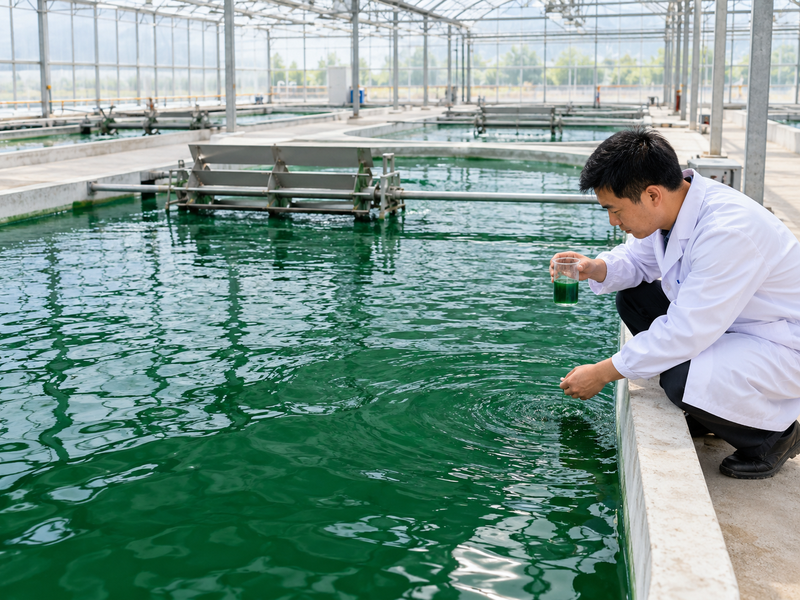
The process must support the certificate. Ask how the supplier excludes unwanted organisms, monitors culture health, controls water, segregates raw material, cleans contact surfaces, and prevents lot mixing. Review how biomass is dried, extracted, filtered, concentrated, and packed; each step affects traceability even if it does not create a toxin. A controlled cultivation system with periodic verification gives the finished-lot result useful context.
Look for deviation records and change notification, not only a polished flowchart. If an algae culture was restarted, a water source changed, or a harvest was combined with another lot, the sampling and release plan may need reassessment. Part 117 provides a U.S. food safety model of hazard analysis, monitoring, verification, and corrective action where applicable. For an overseas supplier, a buyer can request comparable documented evidence while checking which legal framework governs the facility.
10. What evidence closes the buyer’s release file?
Record a decision for the actual shipment
A complete packet is specific. Keep the approved purchase specification, lot-linked COA, original toxin report when required, method scope and reporting limit, traceability to delivered packs, and QA disposition. State the finished-food category and destination considered in the review. If any information is missing, record the hold and the condition for release. This makes the next lot easier to compare and prevents a generic earlier report from being recycled.
Review trends across lots and revisit the plan after a process or supplier change. A negative microcystin result is valuable evidence when sampling and method are sound, but it is not a universal safety verdict. Keep the conclusion narrow: the tested lot met the agreed criterion under the stated method, subject to the other identity, quality, and legal checks that apply. Procurement can then communicate a defensible decision without overclaiming what the assay proved.
Frequently asked questions
Q1. Does spirulina itself produce microcystins? Microcystins are associated with certain toxin-producing cyanobacteria; the purchasing concern is contamination of the supply chain. Assess the actual source and lot.
Q2. Is a “negative” COA sufficient? Only if the COA matches the delivered lot and the test’s sample, analyte scope, method, and reporting limit satisfy the agreed criterion.
Q3. Can a raw-biomass result replace finished-extract testing? Do not assume so. Document the process link and the applicable release requirement for the form you purchase.
Q4. Does a not-detected result mean zero? No. It describes a result below a stated detection threshold in a specified sample and method.
Q5. Should a positive sample simply be retested? Hold the lot and investigate. Any confirmation should follow a written procedure that addresses the initial finding.
Request the lot testing packet
Share your intended market, food category, ingredient form, and testing criterion through Spirulina CN’s blue spirulina page. Ask for the current specification, a representative analytical report, and the commercial lot’s microcystin evidence before release. Your QA team can then compare the reported method and limit with its own acceptance rule.