
Chlorella powder fatty acid profile lot testing can help a food brand understand the lipid fraction of a raw ingredient. It can also mislead if a chromatogram’s percentages are presented as percentages of the whole powder. Chlorella biomass contains protein, carbohydrates, pigments, minerals and water as well as lipids. The buyer needs both total-fat content and a named-lot fatty-acid analysis before estimating what a finished serving receives.
An original Chlorella vulgaris profiling study used chromatography to identify fatty acids in its experimental material. The method and observed compounds are context, not a specification for the commercial chlorella grade you may buy.
1. What is the denominator of each number?
Ask whether the result is total lipid as a fraction of dry biomass, a named fatty acid as a fraction of total identified fatty acids, or milligrams of that fatty acid per gram of powder. These are different measures. A chart showing 30% of an oil’s fatty acids does not mean 30% of chlorella powder. Keep each denominator written beside the figure in the purchasing sheet.
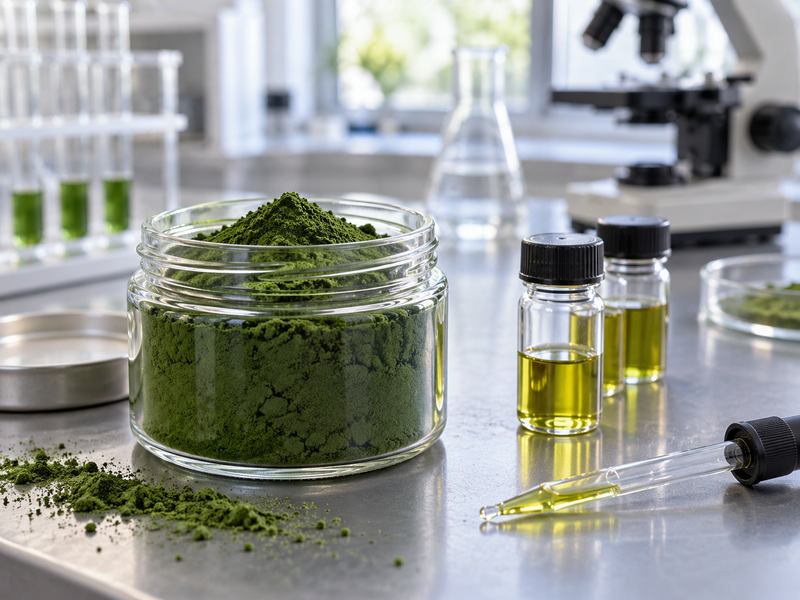
2. Which assay generated the profile?
Confirm extraction, conversion to fatty-acid methyl esters or other preparation, chromatography method, calibration, peak identification and reporting limit. The research profile demonstrates one analytical approach; another qualified laboratory may use a different validated method. If two suppliers’ reports diverge, test sealed splits at one lab before interpreting the difference as an ingredient advantage.
| Report line | Meaning | Buyer request |
|---|---|---|
| Total fat | Entire measured lipid fraction | Method and as-is basis |
| Fatty-acid percentage | Relative distribution | Named peaks and denominator |
| mg/g powder | Ingredient-level amount | Lot and uncertainty |
3. Why does species and cultivation matter?
Record the exact chlorella species and grade, cultivation mode and processing description. Different material histories can change composition, so a paper on one strain or culture is not a contract guarantee. If a supplier offers a special lipid-oriented grade, ask for repeat commercial lot data and a process description. Keep it separate from ordinary food-grade powder unless the specification actually defines the difference.

4. How much reaches the finished serving?
Convert the report to milligrams per gram of powder, then multiply by grams of chlorella in the finished serving. Add fatty acids from all other oils and ingredients in the formula. A 1-gram inclusion cannot be described as a significant fatty-acid source merely because one peak is prominent in the extracted lipid. Have label specialists assess any claim on the finished food and destination rules.
5. What could happen during storage?
Fatty-acid composition and sensory quality can be affected by oxygen, heat, moisture, light and time. Ask for package barrier, production date and storage instructions. Retain an unopened approved sample and compare with the first commercial delivery. If the powder develops an unfamiliar odor, hold it for investigation rather than treating the fatty-acid table as evidence that it remains acceptable.
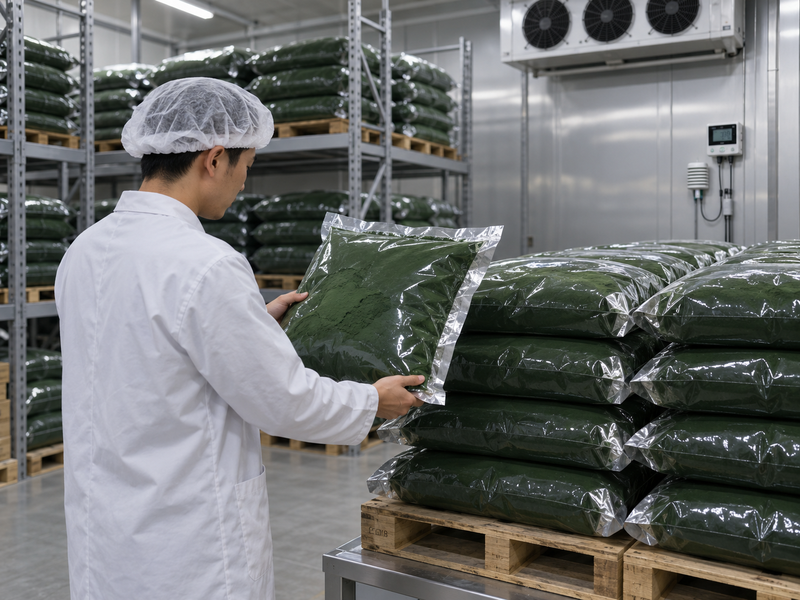
6. Should fatty acids be release criteria?
Only when they materially affect the product or a substantiated label target. Otherwise, the profile can be a periodic monitoring parameter while identity, microbiology, contaminants, moisture and physical behavior remain the release gates. A tight minimum based on one lot can create supply problems without improving the food. Review several commercial batches and method uncertainty before writing numeric limits.
| Use case | Sensible approach |
|---|---|
| General green ingredient | Monitor profile periodically |
| Nutrient-positioned formula | Set named analyte and serving target |
| Supplier substitution | Same-method test of both lots |
7. What other ingredient tests belong beside the lipid report?
Confirm species, cell-wall processing where relevant, particle size, moisture, microbiology and contaminant data. Test color, taste and dispersion at the planned dose. A favorable fatty-acid profile cannot rescue a powder that fails the line trial or safety specification. Keep the supplier’s original report attached to the approved sample code for traceability.
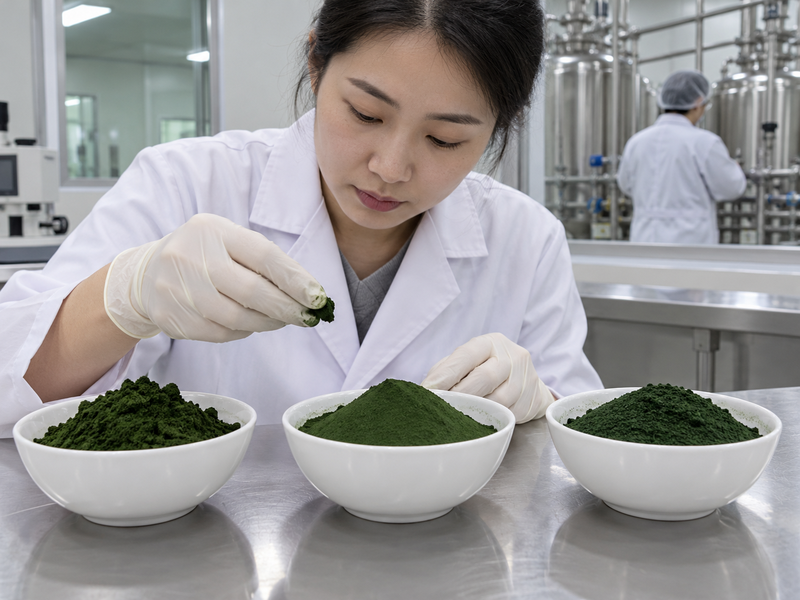
8. What should procurement ask in the first inquiry?
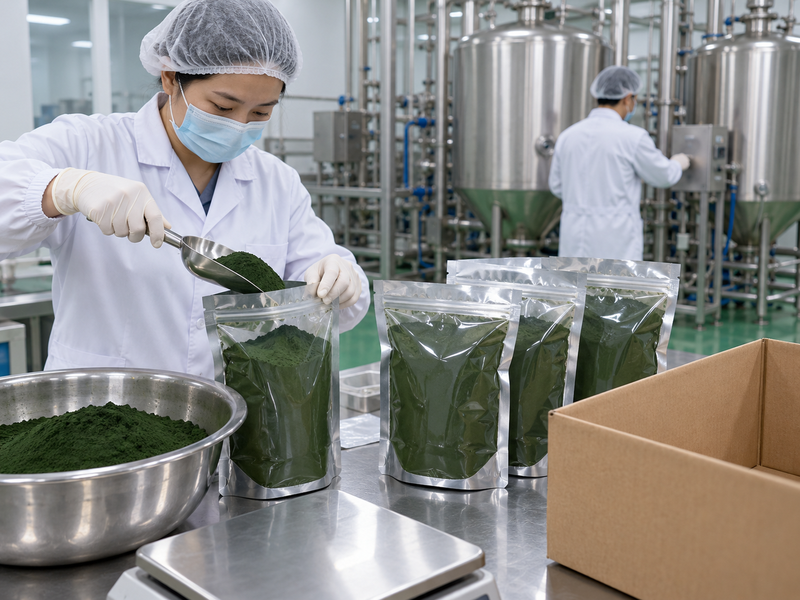
Send the product type, dose, target fatty acids if any, annual volume and destination. Request a lot-linked profile, total-fat result, assay description and current specification. Ask whether the stated profile is typical or guaranteed. Agree on a matched sample and test plan before placing the commercial order.
As an illustrative check, suppose a profile lists a fatty acid at 30% of measured fatty acids. The buyer cannot put 30% of the chlorella dose into a serving calculation. First determine total fat per gram of powder, then the share represented by all identified fatty acids under that method, and only then estimate the named compound. Ask the lab for a direct mg/g result if the conversion remains uncertain. If the finished serving contains little chlorella, the marketing case for a fatty-acid claim may disappear even when the chromatogram’s largest peak looks persuasive.
FAQ
Does a fatty-acid peak percentage equal powder percentage? No. Check its denominator.
Can a research profile replace a lot COA? No. Commercial material needs its own evidence.
Is total fat the same as a named fatty acid? No. One measures the whole lipid fraction.
Should every buyer demand a guaranteed profile? Only when it changes a product decision.
What if two labs disagree? Align sample identity, method, moisture basis and units before choosing a result.
Request a matched chlorella sample, fatty-acid profile and quote with your specification, expected quantity and destination.