
Blue spirulina bulk air freight vs sea freight is a decision about usable arrival, accepted cost and exposure on a particular order. Air service may shorten a lane; sea service may reduce unit transport cost at a larger load. Neither statement settles a purchase without a carrier quote, the actual route and time for customs and QA. A blue pigment shipment also needs suitable packaging and traceable lots. The Spirulina CN blue spirulina page says buyers should confirm packaging, schedule and export documentation for bulk supply. Start with this: choose a mode against a dated production need, not a general rule.
Contents
- How should buyers compare blue spirulina bulk air freight vs sea freight?
- How do small and large orders change the comparison?
- Which time intervals make up an air shipment?
- Which time intervals make up a sea shipment?
- How should total landed cost be calculated?
- What exposure risks need product-specific evidence?
- Which Incoterms fit the proposed carriage?
- How can a launch order use two modes?
- What information should the forwarder quote?
- When should the chosen mode be revisited?
1. How should buyers compare blue spirulina bulk air freight vs sea freight?
Use the same end point for both offers
Compare the date on which the exact lot will be approved at the buyer’s plant. Start with a common cargo-ready date after supplier QA release. Add pickup, export steps, main transit, import entry, inland delivery and buyer receiving checks. A flight duration and a vessel duration exclude most of that chain. Keep assumptions about holidays, cutoff dates and laboratory work visible. Ask the forwarder for a planning range and the next available service, rather than a generic transit promise.
The same quality rules apply to both. A damaged liner or missing COA should stop release regardless of how quickly cargo traveled. Include remaining shelf life at expected receipt and the amount needed by the next production run. If the shipment contains several lots, the faster mode only helps if each lot can be inspected and released on arrival. Align the comparison with a lot-specific COA and approved SKU, not a broad ingredient description.
2. How do small and large orders change the comparison?
Quote actual packed dimensions
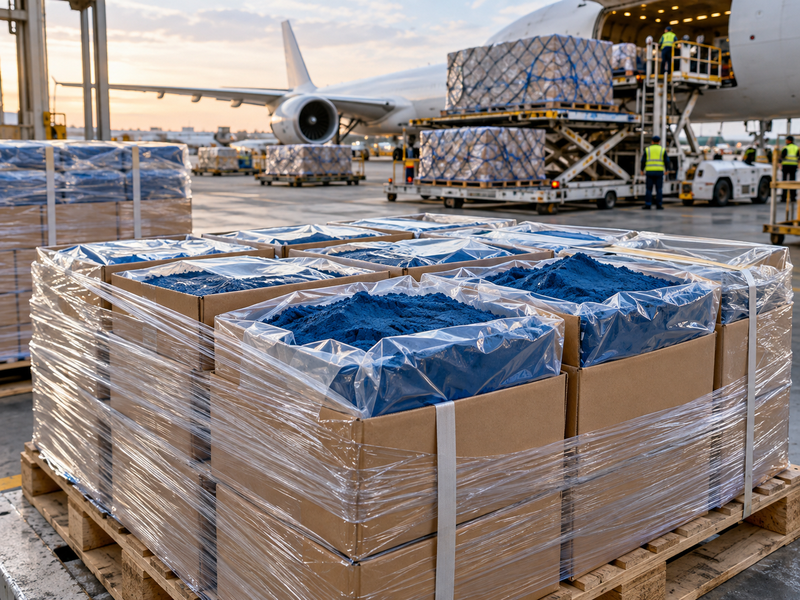
A small urgent order may fit a carrier’s air-cargo service, while a larger scheduled purchase may justify a sea-freight movement. Yet transport cost depends on packed dimensions, gross weight, origin and destination charges, consolidation and service availability. Air quotes may use chargeable weight. Sea quotes can have minimum charges and local fees that matter greatly for less-than-container loads. Ask both forwarders to price the actual pallets or cartons, not only ingredient net kilograms.
Run the plant test: if only a small portion is needed for a launch, shipping the full annual requirement by air may buy speed for inventory that will sit in storage. If a large order fills a container but the buyer cannot consume it within the required remaining-life window, sea’s lower transport cost may still be a poor bargain. For either mode, check whether a distributor with approved local stock changes the route. Do not treat generic mode claims as quoted prices. Compare complete offers with the same delivery term and named destination.
| Order profile | Question | Evidence |
|---|---|---|
| Pilot or bridge quantity | How soon must it be released? | Production schedule |
| Regular replenishment | Can a longer range be covered? | Inventory plan |
| Large seasonal buy | Will every pack be used in time? | Drawdown and expiry dates |
| Odd-sized pallets | What is billable volume or weight? | Packed dimensions |
3. Which time intervals make up an air shipment?
Look beyond time in flight
An air plan includes seller release, collection, terminal acceptance, security screening, possible consolidation, flight connection, destination handling, customs and local delivery. The exact sequence changes by route and service. Cargo can be physically near an airport yet miss a cutoff, adding a new departure cycle. Request the latest acceptance time and the carrier’s confirmation that the booked flight or service can take the cargo. Keep a contingency for rebooking, particularly when the order arrives close to a scheduled production run.
Air also needs paperwork early. The importer should check invoice, composition, packing list and lot identifiers before shipment. An incomplete entry can consume the time gained in main transit. Make sure the COA relates to the physical packs and that the receiver expects the delivery. The existing export-document guide helps identify useful preparation steps, while your broker decides the market-specific file. Air freight is useful when the whole chain can move quickly, not merely when the aircraft does.

4. Which time intervals make up a sea shipment?
Model sailing and destination handling separately
Sea freight adds container booking or consolidation, port delivery, loading cutoffs, ocean carriage, discharge, destination terminal handling, import entry and inland trucking. A quoted port-to-port transit time does not cover those activities. For a less-than-container movement, deconsolidation can introduce another handoff. For a full container, loading quality and container condition become more visible responsibilities. Request an actual sailing plan, cutoff dates and a clear statement of where cargo changes custody.
Protect against a false economy. A longer itinerary means more calendar time in transport and potentially more temperature and moisture cycling, though the effect on a sealed commercial powder must be judged from its own packaging and stability data. The UNECE CTU Code addresses securing cargo in transport units. Its condensation discussion explains how packaging materials and changing temperatures can contribute to water damage. Check dry, sound packaging and container preparation before loading.
| Sea-freight interval | Date to obtain | Common planning gap |
|---|---|---|
| Cargo cutoff | Terminal or consolidator notice | Missed sailing |
| Vessel departure | Carrier confirmation | Tentative booking treated as actual |
| Port arrival | Updated ETA | Inland delivery still pending |
| Container unpack | Warehouse appointment | Additional handling or delay |
5. How should total landed cost be calculated?
Price the accepted material at the plant
Record ingredient price, origin pickup, export charges, main carriage, insurance where purchased, destination charges, broker fees, duties and taxes as applicable, inland transport, warehouse intake and expected quality loss. Then divide by kilograms accepted for use. The terms on the supplier quote determine which line items are already included; avoid counting freight twice. Currency conversion and payment timing can also alter a comparison. Ask finance how to treat recoverable taxes instead of placing them blindly in ingredient cost.
Illustrative arithmetic: suppose an air option costs 1,200 currency units for 100 kg and a sea option costs 500, with all other charges equal. If the sea arrival misses a production run that requires a 900-unit reschedule, its lower freight no longer wins for that order. Those numbers are invented for a decision worksheet, not market prices or route quotes. A later routine order may choose sea once inventory coverage exists. Document the reason so an emergency choice does not become a permanent default.

6. What exposure risks need product-specific evidence?
Do not transfer solution-study limits to dry powder
Phycocyanin studies discuss sensitivity to heat, light and formulation conditions. A review of degradation research supports asking about exposure, but it does not establish a universal shipping temperature for every formulated dry extract. Ask the producer for the current SKU’s storage specification, packaging barrier, shelf-life basis and any excursion data. Then decide whether a logger or a controlled service is justified for the route. Keep a physical inspection and document check at receipt regardless of mode.
Two risks differ: air cargo may undergo several rapid handoffs; sea cargo can spend longer in a closed unit. Neither mode automatically protects against a punctured inner bag, wet pallet or misidentified lot. Ask how pallets are wrapped, protected from rain during loading and prevented from shifting. Record visible conditions at receipt. If a temperature or humidity excursion is suspected, QA should evaluate the actual lot using pre-agreed criteria. A transport choice should never substitute for a sound primary pack and release procedure.
| Exposure | Evidence to collect | Buyer decision |
|---|---|---|
| Heat | SKU stability and logger record | Review excursion |
| Moisture | Liner integrity and package barrier | Inspect or test affected packs |
| Light | Opaque pack and exposure history | Confirm protection |
| Handling | Photos and seal status | Quarantine damage |
7. Which Incoterms fit the proposed carriage?
Name the rule, place and version
ICC distinguishes rules for any transport mode from those for sea and inland waterways. Its Incoterms® 2020 checklist points buyers toward FCA for containerized or multimodal handover, while FOB is designed for a suitable on-board sea delivery. CPT, CIP and DAP can describe other arrangements depending on who arranges carriage and where delivery occurs. Select the rule with commercial and logistics staff, then name a precise point and the 2020 version.
Watch risk under C rules. The seller may pay carriage to a named destination even though risk transfers earlier at delivery to the carrier or on-board vessel, depending on the rule. The ICC Q&A explains that distinction. Insurance, claims cooperation, import formalities and destination receiving appointments need deliberate treatment. Incoterms do not decide whether a lot passes buyer QA or who pays after a quality rejection. Keep those clauses in the purchase and quality documents.
8. How can a launch order use two modes?
Bridge a real gap without doubling confusion
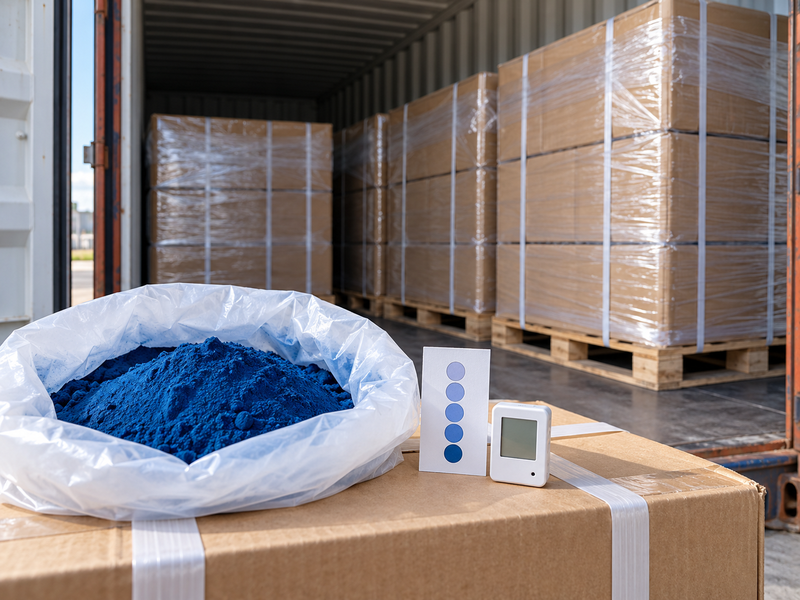
A buyer may send a small, approved bridge quantity by air while the balance moves by sea. Size the bridge from the next committed runs, process loss and buyer QA time. Avoid picking a round number solely because an air quote has a threshold. Ask whether both shipments come from the same production batch. If not, each batch needs its own COA and application acceptance as required by the quality plan. If the same batch is divided, preserve the common lot code and separate shipment IDs.
Illustrative example: a plant needs 20 kg for a pilot run and another 80 kg later. An air bridge for 25 kg could cover the pilot plus a controlled allowance, while sea carries the balance. That scenario does not claim any supplier can meet those dates. It simply shows why demand timing matters more than a blanket mode rule. Compare two sets of customs and destination fees, warehouse intakes and possible damage claims. A split plan is useful only when the extra administration is less costly than a missed run or an oversized express shipment.
| Split-plan item | Air bridge | Sea balance |
|---|---|---|
| Quantity basis | Near-term approved use | Later forecast use |
| Lot record | COA and labels | COA and labels |
| Release | Separate receiving event | Separate receiving event |
| Cost | Full small-shipment charges | Full destination charges |
9. What information should the forwarder quote?
Send a controlled request for quotation
Give both forwarders the same origin pickup point, destination address, delivery term, pack count, dimensions, gross and net weight, commodity description and ready date. State any restrictions from the supplier’s storage specification rather than inventing a cold-chain requirement. Ask for service name, estimated milestone dates, exclusions, insurance options, local charges, validity period and disruption procedure. The answer should identify whether a route includes consolidation or transfer points.
Keep the sample physical. A quote built from estimated carton dimensions can change when final palletization differs. Confirm pallet height and gross weight with the supplier before booking. The bulk-packaging post provides related pack questions, but the forwarder needs a shipment-specific packing list. Ask how proof of handover and condition will be recorded. That record becomes valuable if cartons arrive crushed or wet. Procurement should compare the complete quote with the planned production date and QA release window.

10. When should the chosen mode be revisited?
Recheck when the planning facts move
Recalculate the choice after a change in production date, supplier lot release, order size, destination, service availability or remaining shelf life. A sea plan that was sensible when ordered may require a small air bridge if launch demand moves forward. An air plan may be unnecessary if an existing qualified lot covers the next run. Make the change before the carrier cutoff and record who authorizes extra cost. Do not switch the transport mode without checking whether the purchase term, insurance and document instructions must change.
Measure the result after receipt. Capture actual cost, time to QA release, damage, excursions and usable kilograms for both modes. Those records support the next decision better than a generalized claim about speed or price. Ask the supplier for a current lot-ready date and both forwarders for comparable complete quotes. Choose the service that protects the production commitment while preserving identity and quality, then retain enough evidence to explain the decision later.
| Change | Review again | Decision owner |
|---|---|---|
| Lot release slips | Flight or sailing availability | Procurement |
| Demand moves earlier | Bridge quantity | Planning |
| Pack dimensions change | Chargeable basis | Logistics |
| Excursion occurs | Lot acceptance | QA |
Final purchasing decision
Blue spirulina bulk air freight vs sea freight has no universal winner. Compare complete routes from QA-released cargo to QA-released inventory, then add accepted cost and exposure controls. A documented, shipment-specific choice gives production a dependable date and procurement a defensible spend.
FAQ
Q1: Is air always safer for phycocyanin powder? No. Packaging, handling and product-specific stability evidence matter in either mode.
Q2: Is sea always cheaper? No. Small-load charges, destination fees and delay costs can reverse the comparison.
Q3: Can one PO use both modes? Yes, if shipment, lot, invoice and receiving records reconcile.
Q4: Does FOB fit container freight by default? ICC generally directs container or multimodal handover toward FCA.
Q5: What date should a forwarder quote support? The buyer’s expected usable-stock date, including clearance and QA release.